Barcelona Faces Major Departures: Key Players Leave Club
Barcelona have known big goodbyes before, but this one cuts right through the spine of a dynasty.
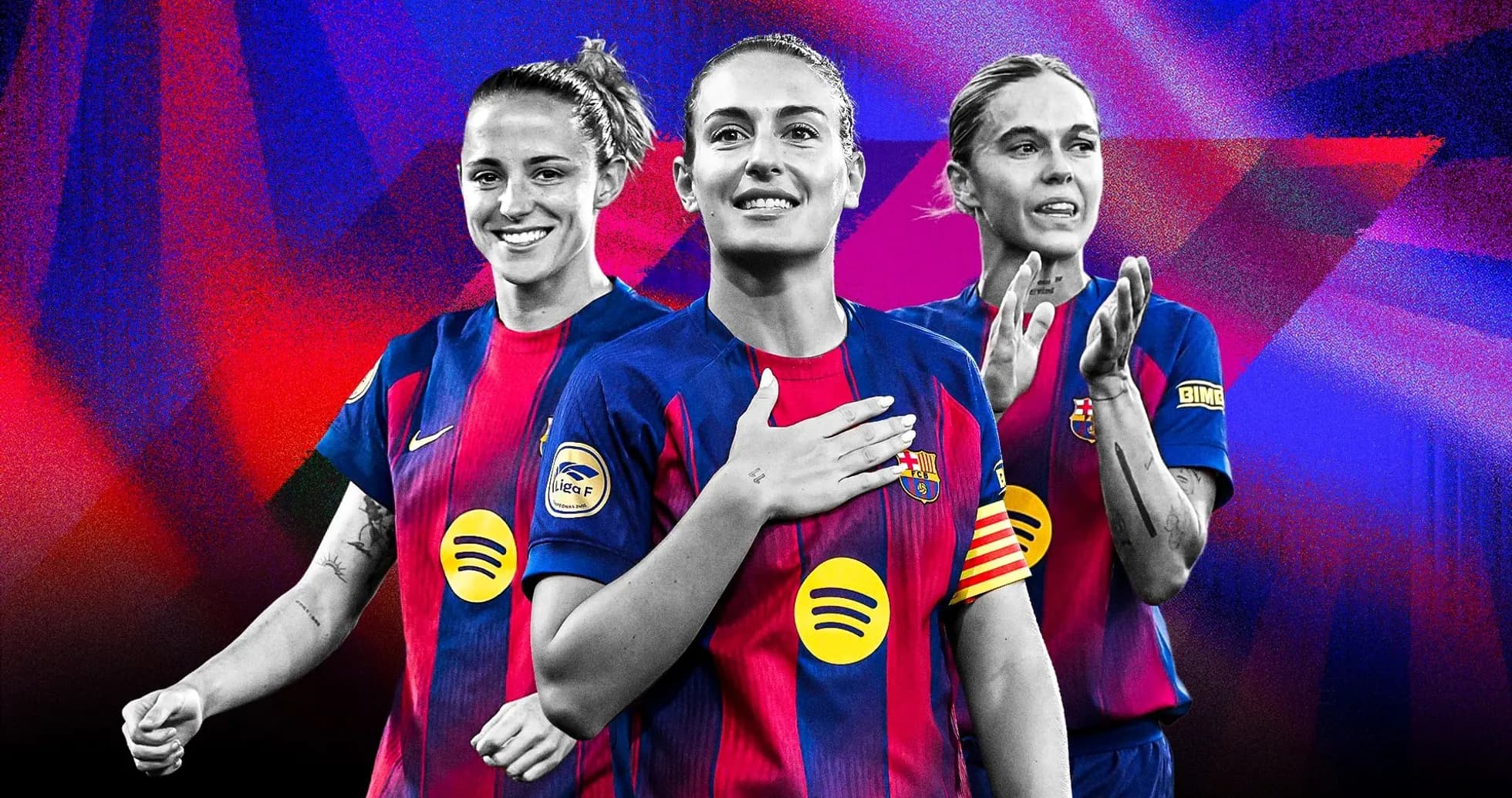
Alexia Putellas, the face of an era. Mapi León, the defensive general. Ona Batlle, the relentless force down the flank. Three pillars of a European champion side, all walking out of the same door. You don’t just “replace” that. You survive it, manage it, and if you’re Barça, you try to turn it into the next evolution of a superteam.
Putellas has been more than a captain. At 32, after a season so strong that a third Ballon d'Or feels entirely plausible, she leaves as the club’s symbol and its emotional centre. León goes as arguably the best centre-back in the women’s game. Batlle departs as one of the elite full-backs in world football. Those are not gaps. They are craters.
And yet, if any club is built for this kind of shock, it is Barcelona.
La Masia and the market collide
The Blaugrana have made an art form of renewal. When the dressing room loses stars, La Masia quietly pushes the next generation forward, a conveyor belt unlike anything else in women’s club football. When that isn’t enough, the transfer window usually finishes the job.
This summer, though, carries a different kind of intrigue. Twelve months ago, the club’s finances bit hard. The men’s team’s issues dragged the women’s side into the same Financial Fair Play net, limiting what could be done in the market. Needs were clear; options were restricted.
Now? Hansi Flick’s squad has just sanctioned a £69 million ($93m) move for Anthony Gordon. That single number changes the mood around the entire institution. If Barcelona can spend again, doors open. But the warning is obvious: money alone doesn’t solve the problem. Spending well does.
And the problem is layered. This isn’t only about raw talent walking out of the training ground gates.
Replacing the captain, not just the player
Putellas’ influence this season went far beyond her passing range or her timing in the box. She became the bridge between eras.
Coach Jonatan Giráldez and then Marcelino Romeu had to look inwards, promoting teenagers and trusting them in high-stakes moments. Clara Serrajordi and Aicha Camara didn’t just get minutes; they became regulars. Martine Fenger, Carla Julia and Adriana Ranera all felt the door open a crack. Sydney Schertenleib, Esmee Brugts, Vicky López and Kika Nazareth took on more responsibility, more expectation, more scrutiny.
In that environment, the captain’s voice matters. The way she speaks on the pitch, the way she settles nerves.
“She’s a player who always tries to help other girls, to get the best out of them,” Brugts said recently of Putellas. “When I talk about the experienced players taking those leading roles, she’s, of course, the main example for this. It calms me down a lot to play next to her and she gives me the confidence to play a good game myself.”
That’s what Barcelona are losing as much as the left foot, the vision, the goals. A guide.
So the club’s to-do list is brutal in its clarity: find a world-class right-back, a world-class centre-back, a world-class midfielder — and from within that rebuilt core, forge new leaders.
The candidates are already in the room. Patri Guijarro, Aitana Bonmatí, Irene Paredes: players with medals, scars and authority. They know what it takes to win everything, and they know what it looks like when the outside world starts to doubt.
And this club has already ridden out turbulence. Mariona Caldentey, Lucy Bronze, Keira Walsh and Sandra Paños all left before or during the 2024-25 season. The response? Another emphatic campaign, another trophy haul, another reminder that the badge weighs more than any single name.
This is still a world-class squad, backed by the most productive youth system in the women’s game and hardened by years of winning. The road ahead will not be smooth, but it is not a cliff edge either. Barcelona bend. They rarely break.
Spain’s quiet advantage
The story doesn’t end in Catalonia. It stretches straight into the heart of the Spain national team.
León is expected to join London City Lionesses, who finished sixth in their debut season in the Women’s Super League. Putellas may yet follow her to the same club. Batlle, meanwhile, is set for Arsenal, fresh from beating Barça in the 2024-25 Champions League final.
Batlle’s move feels like a straight trade in terms of demands. At Barcelona, she started for a side chasing four trophies. At Arsenal, she walks into a team competing on three fronts, with League Cup rules now excluding Champions League participants from that competition. The WSL is stronger than Liga F, but the overall balance of intensity and game load should level out.
León’s situation is different. So is Putellas’, if she joins her.
London City Lionesses will not be in the Champions League. The calendar will be lighter, the midweek strain lower. The blockbuster European nights vanish, but the WSL’s week-to-week standard remains higher than Liga F. León — and potentially Putellas — will still collide regularly with Arsenal, Chelsea, Manchester City and Manchester United.
Fewer minutes. Less physical load. Two key players in their 30s, still operating at a high domestic level, heading towards the 2027 Women’s World Cup with fresher legs and clearer minds. For Spain, that could be a gift.
There is another upside for La Roja. If the voids left by Putellas, León and Batlle at Barça are filled by La Masia products, the national team will feel the benefit for years.
Serrajordi is the clearest example. She is already in Spain’s squad for Friday’s clash with England and has grown steadily since her senior international debut in October. She is not alone. Jana Fernández and Lucía Corrales also came through Barcelona’s system before financial pressures forced their sales last summer.
The pipeline in Catalunya keeps flowing. It feeds Barcelona first, but the national team drinks from the same well.
Right now, 11 players in Spain’s current squad are Barça footballers. Add Fernández and Corrales, and the influence of the club’s academy and environment becomes impossible to ignore. The development work done there is paying off in red shirts as much as in blaugrana.
A summer that shapes two giants
So the picture is complicated. Barcelona lose an icon, a defensive rock and a top-tier full-back all at once. Their recruitment — and their trust in La Masia — will define how quickly the next version of this team emerges.
Spain, though, might just come out of this stronger. Key veterans could arrive at the 2027 World Cup with more fuel in the tank, while a new wave of Barça-schooled youngsters gathers experience at club level and carries it straight into the national side.
The transfer window will be noisy, and Barcelona will sit at the centre of it, as they so often do. The question now is not whether they cope.
It’s how quickly they turn another era-defining exodus into the launchpad for the next great team — for club and for country.