Anthony Barry's Honest Half-Time Interviews at World Cup
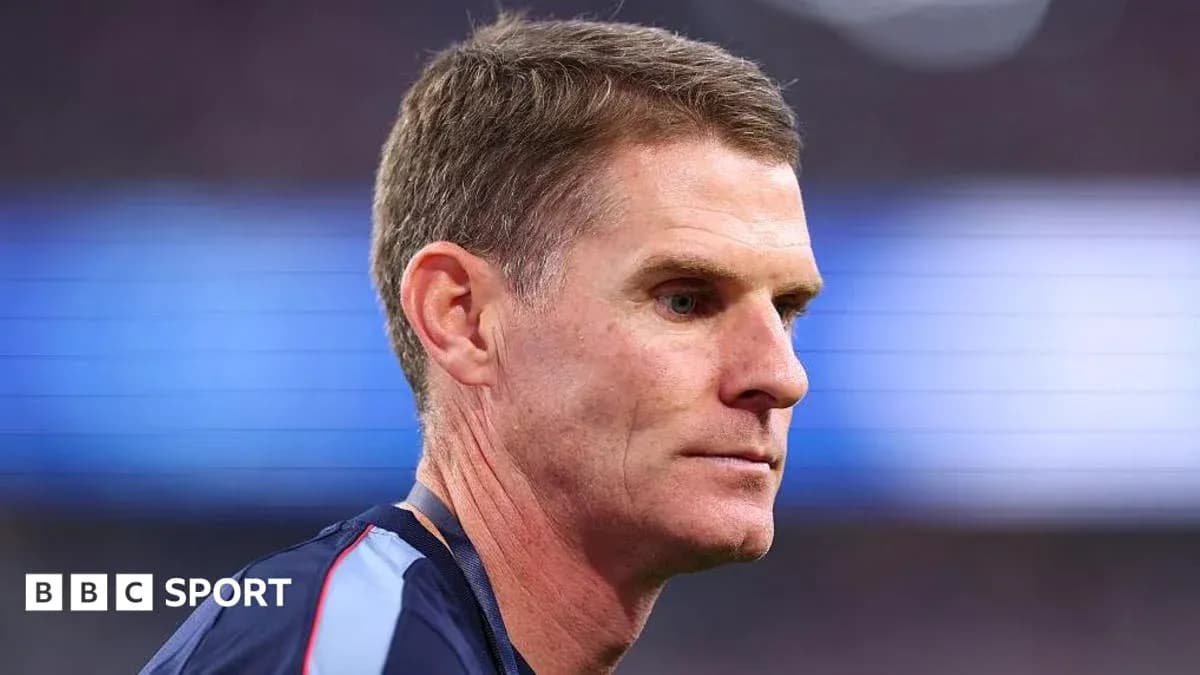
Anthony Barry will continue fronting England’s televised half-time interviews at the World Cup, even after his blunt on-air dissection of the team’s first 45 minutes against Croatia raised eyebrows.
The assistant coach, trusted lieutenant to Thomas Tuchel, did not sugar-coat what he had seen in Dallas with the game poised at 2-2. England eventually found their stride and won 4-2, but Barry’s words at the interval cut through the usual noise of tournament platitudes.
He called the first half “complicated and confusing”, spoke of “nervous energy” and a side playing with “fearful patterns”. It was the kind of language usually kept for the dressing room, not the broadcast gantry.
Inside the camp, though, there is no sense of a line being crossed.
Tuchel is understood to welcome Barry’s candour and sees value in an honest public reading of the game, rather than a polished, empty soundbite. There is no suggestion that players or staff were unsettled by his comments; if anything, they are seen as an extension of the demanding standards set behind closed doors.
There is also a practical calculation at play. England believe that asking Tuchel or a player to break away for a live interview in the brief, frantic minutes of half-time would be a poor use of already limited time. Barry, heavily involved in tactical messaging but not the final voice in the dressing room, is considered better placed to handle the broadcast duties without disrupting preparations.
Half-Time Interviews
Half-time interviews have been introduced as a new broadcast feature during World Cup matches. They are officially framed as a “request rather than mandatory”, which has produced a patchwork of approaches: some nations send their head coach, others a substitute, some offer little more than a few guarded lines.
Barry went the other way. When asked for his assessment against Croatia, he delivered a detailed critique.
“Overall, a complicated and confusing first half from us really. I think a lot of nervous energy early on and maybe that should be accepted and maybe expected in the opening game of a World Cup,” he said, before drilling into England’s decision-making.
“We played long when we should play short and played short when we should play long really. Not playing through the gaps, so not allowing us to accelerate our game the way we wanted to.
“You'd think the penalty would free us up and allow us to play more like us and look more like ourselves, but again we fall back into some fearful patterns.
“Yeah, we've always been able to rely on set-pieces. We get the second goal and again we're hoping that's the moment to free us up and move forward in the game. But, OK, we concede the second goal late on and now we have to speak about that at half-time.”
The honesty startled some viewers, more accustomed to non-committal lines about “staying in the game” and “taking our chances”. England, though, see no reason to change course. Barry will remain the public face of those interval interviews as the tournament rolls on.
Fitness Concerns
Away from the cameras, there is a more traditional concern for the backroom team: fitness.
Marcus Rashford is being assessed by England’s medical staff ahead of Tuesday’s match against Ghana after reporting muscle discomfort following the win over Croatia. The forward came off the bench in Dallas to score England’s fourth goal, but later complained of soreness.
The early mood around his condition is optimistic. The issue is not currently expected to rule him out of contention, but his workload will be managed and his response to treatment monitored closely in the build-up.
England have embraced transparency on the microphone. They will hope Rashford’s body proves just as cooperative.