
AC Milan vs Atalanta: A Tactical Battle in Serie A
Under the floodlights of Stadio Giuseppe Meazza, this was billed as a late-season crossroads rather than a cup tie, but it carried all the tension of a knockout. AC Milan, sitting 4th in Serie A with 67 points and a goal difference of 18 heading into this game, were trying to protect their Champions League berth. Atalanta arrived in 7th on 58 points, goal difference 16, still chasing Europe with their usual defiant swagger.
Both sides leaned into their seasonal identities. Milan, whose most-used system this campaign has been the 3-5-2 (32 league appearances in that shape), stayed loyal to the back three. Massimiliano Allegri’s choice of M. Maignan behind a trio of K. De Winter, M. Gabbia and S. Pavlovic underlined a preference for controlled build-up rather than chaos. The wing corridors belonged to A. Saelemaekers and young D. Bartesaghi, with a central band of R. Loftus-Cheek, S. Ricci and A. Rabiot asked to stitch control to vertical threat. Up front, the partnership of S. Gimenez and Rafael Leão offered contrasting profiles: a penalty-box reference point alongside a roaming, dribbling spearhead who has delivered 9 league goals and 3 assists so far.
Atalanta, whose tactical DNA is almost welded to the 3-4-2-1 (used 32 times this season), mirrored the back-three but with a more aggressive posture between the lines. Raffaele Palladino trusted M. Carnesecchi in goal, protected by G. Scalvini, I. Hien and S. Kolasinac. The flanks were manned by D. Zappacosta and N. Zalewski, with M. De Roon and Ederson forming a combative double pivot. Ahead of them, the creative storm of C. De Ketelaere and G. Raspadori buzzed behind N. Krstović, one of Serie A’s most productive forwards this season with 10 goals and 5 assists.
The absences shaped the story before a ball was kicked. Milan were stripped of experience and guile in key zones: L. Modrić (broken cheekbone) removed a metronome from Allegri’s options, while C. Pulisic (muscle injury) took away an 8-goal, 3-assist wide threat who also missed a penalty earlier in the campaign. At the back, F. Tomori’s suspension for a red card left Milan without their most aggressive front-foot defender. On the other side, Atalanta had to cope without L. Bernasconi and, more significantly, B. Djimsiti, whose hamstring injury robbed Palladino of a reliable organiser in the back line.
Those gaps were visible in the way the contest unfolded. Atalanta’s 3-4-2-1 immediately targeted the seams between Milan’s centre-backs and wing-backs. With De Ketelaere drifting into the right half-space and Zalewski driving high from the left, the visitors created overloads that Milan’s midfield trio struggled to plug without Modrić’s positional intelligence or Pulisic’s outlet running. The 0–2 half-time scoreline at San Siro told of an Atalanta side that translated their season-long attacking balance—50 goals in total, split evenly as 25 at home and 25 on their travels—into ruthless early incision.
Milan’s season numbers framed the risk they were running. At home they have averaged 1.3 goals scored and 1.1 conceded, a narrow margin that depends heavily on defensive stability. Remove Tomori and the margin shrinks further. Atalanta, meanwhile, came in scoring 1.4 goals on their travels and conceding 1.1, a profile of a side comfortable in open, end-to-end games. That is exactly what the first half became, and it suited the visitors.
The disciplinary undercurrent was always likely to matter. Milan’s yellow-card distribution shows a pronounced late-game surge: 25.42% of their cautions arrive between 76–90 minutes, a sign of fatigue or emotional overreach when chasing games. Atalanta mirror that pattern with 22.81% of their yellows in the same window and a notable red-card profile: half of their reds have come in the opening 0–15 minutes, the other half in 76–90. This is a team that lives on the edge, early and late. In a match that turned into a 2–3 thriller, that volatility hovered over every transition.
Within that chaos, individual duels defined the tactical battle. The “Hunter vs Shield” narrative centred on N. Krstović against a Milan defence that, overall, concedes 0.9 goals per game but has been slightly looser at home at 1.1. Krstović’s 10 goals and 74 shots this season, plus his 258 duels (113 won), speak of a forward who never stops engaging defenders physically. Against a Tomori-less back line, his movement across the front and ability to pin Gabbia or drag De Winter wide were key to prising open the red-and-black structure.
In midfield, the “Engine Room” duel pitted Ederson and M. De Roon against Milan’s Ricci–Rabiot–Loftus-Cheek triangle. De Roon’s screening allowed Ederson to step higher, disrupting Ricci’s rhythm and forcing Milan to build through the wings rather than centrally. That, in turn, isolated Saelemaekers and Bartesaghi, who had to manage both width and depth against Zalewski and Zappacosta. Without Modrić’s calming presence, Milan’s possession lacked the subtle tempo shifts needed to disorganise Atalanta’s compact 3-4-2-1 mid-block.
Further forward, De Ketelaere’s role as Atalanta’s creative hinge was decisive. With 5 assists this season, 969 passes and 60 key passes, he has been one of Serie A’s most influential playmakers. His drifting into pockets between Ricci and the outside centre-backs forced constant handovers in Milan’s back three. Every time the timing of those handovers faltered, Krstović or Raspadori were ready to exploit the blind side.
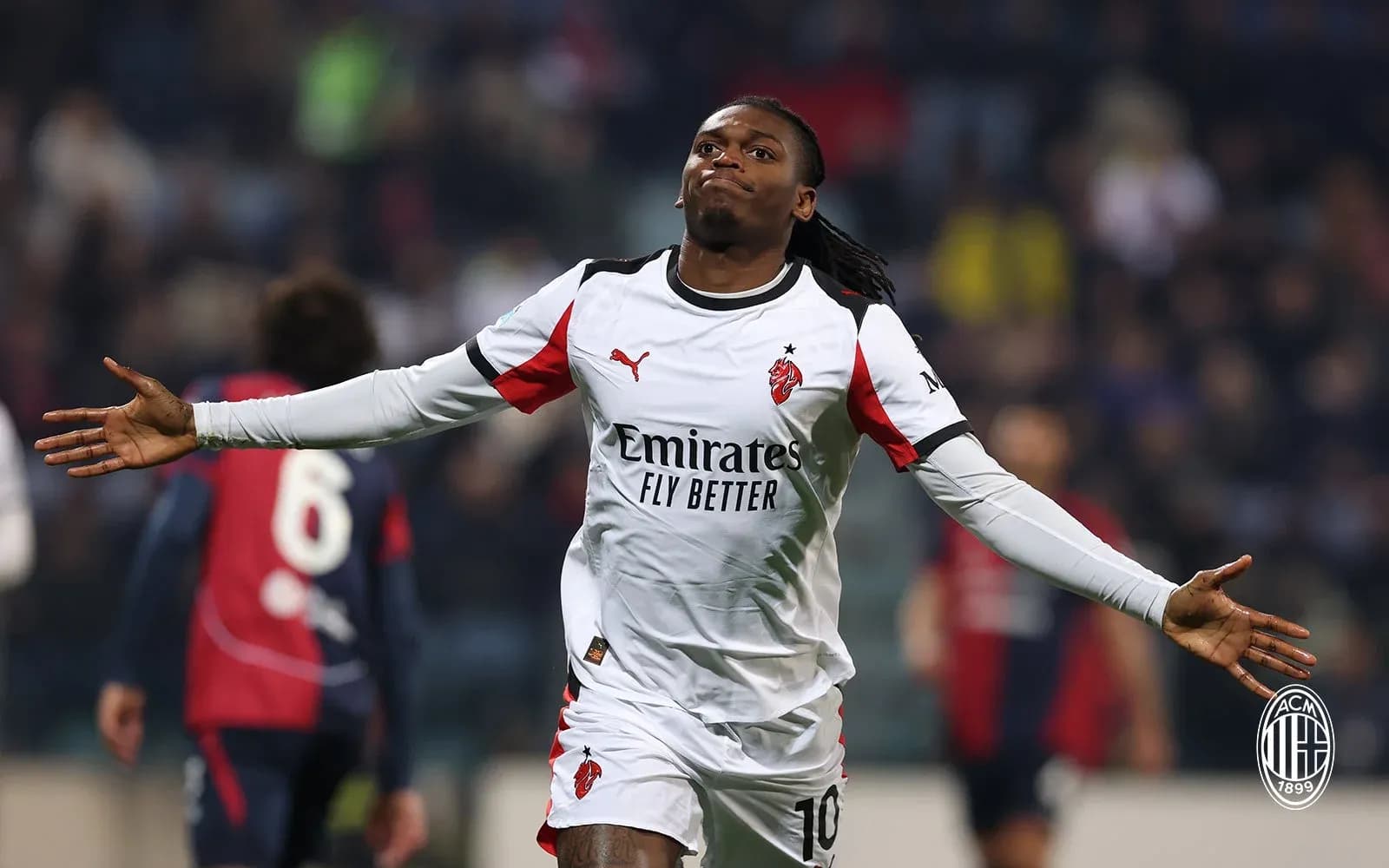
Milan’s response after the break was powered, inevitably, by Rafael Leão. With 9 league goals, 3 assists and 55 dribble attempts (25 successful), he remains their most explosive outlet. As the game opened up, Leão began attacking the channels between Scalvini and Zappacosta, forcing Atalanta’s back line to retreat and stretching the previously compact block. The 2–3 full-time scoreline, after being 0–2 down at the interval, reflected Milan’s attacking resilience as much as Atalanta’s early superiority.
From a statistical prognosis standpoint, the outcome aligned more closely with Atalanta’s offensive profile than Milan’s defensive one. Both sides came in averaging 1.4 goals scored overall, but Atalanta’s away balance—25 goals for, 20 against—suggested a greater tolerance for high-scoring affairs. Milan’s 15 clean sheets overall, underpinned by 8 on their travels and 7 at home, pointed to a side that usually controls games better than this. Yet the absence of Tomori and Modrić, combined with Atalanta’s layered front three and De Ketelaere’s form, tilted the xG narrative towards the visitors in the decisive phases.
Following this result, the table tightens and the storylines harden. Milan remain a side whose structural 3-5-2 gives them control but whose reliance on a few key creative pieces leaves them vulnerable when those pieces are missing. Atalanta reaffirm their reputation as Serie A’s great disruptors: tactically brave, offensively balanced home and away, and capable of turning even San Siro into a stage for their 3-4-2-1 to flourish.