Torino vs Sassuolo: Tactical Identities in Serie A Clash
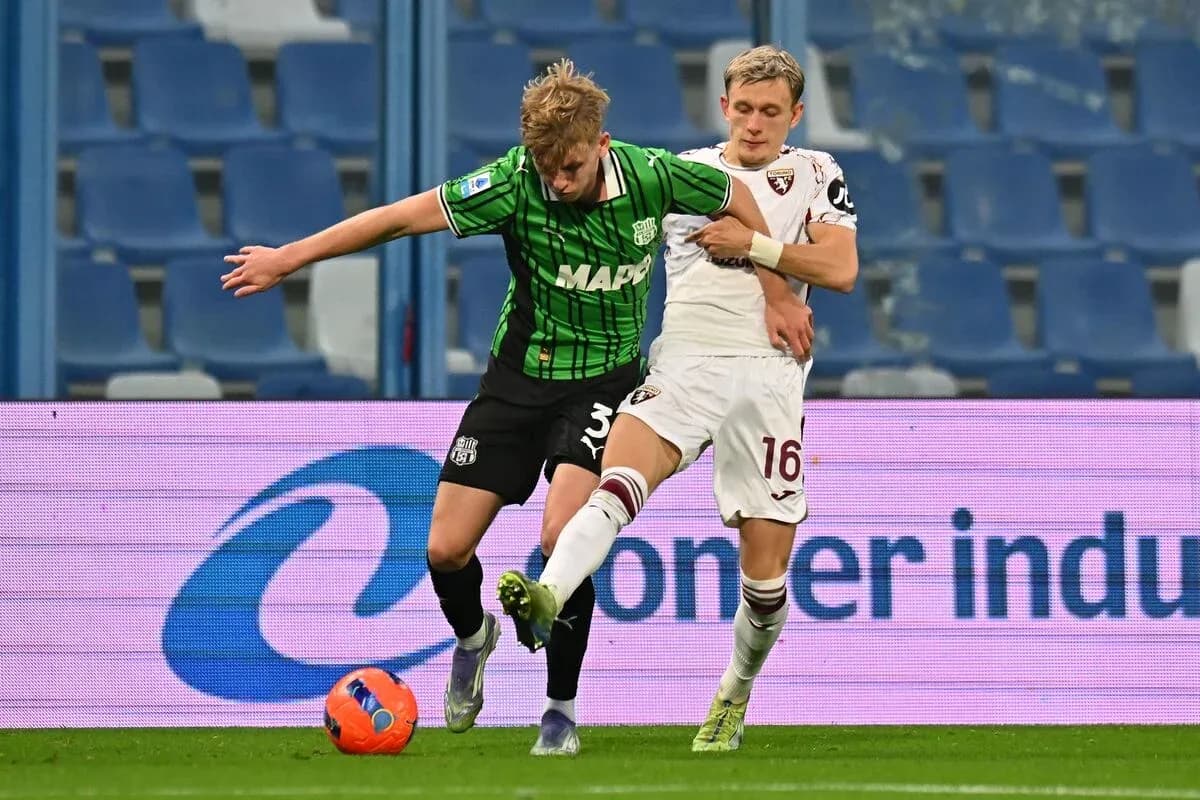
On a cool Turin evening at Stadio Olimpico Grande Torino, a mid-table Serie A story tightened rather than exploded. Torino’s 2–1 home win over Sassuolo in Round 36 did not alter the league hierarchy dramatically – Sassuolo remain 11th on 49 points, Torino 12th on 44 – but it sharpened the contrast between their footballing identities and the tactical choices that define them.
I. The Big Picture – Two Identities, One Narrow Margin
Heading into this game, the numbers already told a tale of opposites. Torino’s season has been one of volatility: 12 wins, 8 draws, 16 defeats in total, with a bruising overall goal difference of -18, born from 41 goals scored and 59 conceded. At home, though, they are a different animal: 8 wins from 18, with 25 goals for and 27 against, powered by an average of 1.4 goals scored and 1.5 conceded at Stadio Olimpico Grande Torino.
Sassuolo arrived as a more balanced, if equally flawed, side. Overall they sit on 14 wins, 7 draws, 15 losses, with a total goal difference of -2 (44 for, 46 against). On their travels they have been competitive if inconsistent: 5 away wins, 5 draws, 8 defeats, scoring 21 and conceding 23, for an away average of 1.2 goals scored and 1.3 conceded.
On the tactical board, Leonardo Colucci’s Torino stepped away from their season-long staple of the 3‑5‑2 (their most-used shape overall) and doubled down on a 3‑4‑2‑1 that has been seen only 3 times in total this campaign. Fabio Grosso stayed faithful to Sassuolo’s identity: the 4‑3‑3 that has started 34 of their league fixtures again framed their approach.
II. Tactical Voids – Who Was Missing, and What It Cost
Both squads walked out carrying invisible absences. For Torino, the creative and depth chart was thinned by the loss of Z. Aboukhlal (muscle injury), F. Anjorin (hip injury) and A. Ismajli (muscle injury). None are structural pillars of this particular starting XI, but their absence narrowed Colucci’s options between the lines and in defensive rotation. The decision to trust G. Gineitis and M. Prati in central roles, with N. Vlasic and A. Njie operating behind G. Simeone, reflected a desire to keep technical security and vertical threat despite those absences.
Sassuolo’s voids were heavier, and more central to their identity. D. Boloca (muscle injury) and F. Cande (knee injury) removed options in buildup and defensive width. A. Fadera’s suspension for yellow cards stripped Grosso of a direct, high-intensity wide runner. J. Idzes (foot injury) and E. Pieragnolo (knee injury) further limited defensive reshuffles. The result was a back four of J. Doig, T. Muharemovic, S. Walukiewicz and W. Coulibaly that had to cope with Torino’s box-occupying front line without much experienced cover from the bench.
Disciplinary trends also hovered over the fixture. Torino’s yellow-card profile shows a late-game surge: 18.84% of their yellows come in the 76–90 minute window, and a further 21.74% between 91–105. Sassuolo are even more volatile late on, with 28.75% of their yellows in 76–90 and 15.00% from 91–105. Add Sassuolo’s red-card pattern – with N. Matic, A. Pinamonti and D. Berardi all having seen red this season – and it was no surprise that the closing stages in Turin were tense, tactical and on the edge of control.
III. Key Matchups – Hunter vs Shield, Engine Room vs Enforcer
Hunter vs Shield was headlined by G. Simeone against a Sassuolo defence that, on their travels, concedes 1.3 goals per game. Simeone’s campaign has been quietly ruthless: 11 goals in total from 30 league appearances, with 56 shots (28 on target) and 19 key passes. He thrives on early crosses and second-phase chaos, exactly the zones where Torino’s wing-backs V. Lazaro and R. Obrador could attack the spaces outside Sassuolo’s centre-backs.
Against him, Walukiewicz and Muharemovic faced a striker who does not just finish but presses and duels – 271 total duels, 106 won – pinning back a back line already missing the positional calm of Idzes. The 2–1 scoreline reflected Torino’s capacity to turn those marginal duels into decisive territory.
On the other side, A. Pinamonti carried Sassuolo’s scoring burden. His 8 total goals and 3 assists this season, alongside 54 shots and 17 key passes, make him the reference point of Grosso’s 4‑3‑3. Yet his penalty record is a warning sign: he has missed 1 penalty in total, with 0 scored, underlining that Sassuolo’s cutting edge can still flicker at crucial moments.
The Engine Room battle was a study in contrasts. Torino’s young double pivot of Prati and Gineitis had to handle the seasoned brutality and intelligence of N. Matic and the box-to-box energy of K. Thorstvedt. Matic’s campaign numbers are those of a controlling enforcer: 1 total goal, 1 assist, 1 red card, 7 yellows, 42 tackles, 26 interceptions and 10 successful blocks. He is the metronome and the axe. Thorstvedt adds thrust and risk: 4 goals, 4 assists, 43 tackles and an eye-catching 13 blocked shots – each one a successful intervention – plus 8 yellow cards that underline his willingness to step into the fire.
Out wide, Sassuolo’s creative edge was supposed to come from A. Laurienté and, from the bench, D. Berardi. Laurienté’s season is elite in creative terms: 6 total goals, 9 assists, 52 key passes and 75 attempted dribbles, 27 successful. Berardi, with 8 goals, 4 assists and 32 key passes, is both scorer and architect, though his record of 1 red card and 1 missed penalty shows the high-risk, high-reward edge of his game. Torino’s back three of E. Ebosse, S. Coco and L. Marianucci had to compress space between the lines, trusting Vlasic and Njie to help screen passing lanes into those wide creators.
IV. Statistical Prognosis – What This Result Says About Both
Following this result, the statistical currents that brought both teams here feel reinforced rather than overturned. Torino’s home profile remains that of a side that can outpunch its overall numbers in Turin: their 1.4 home goals per game, against a Sassuolo defence that concedes 1.3 away, made a multi-goal home performance more likely than the table alone suggested, and the 2–1 scoreline fits that projection neatly.
Sassuolo’s broader pattern – 1.2 goals scored and 1.3 conceded on their travels, with only 4 away clean sheets in total – again manifested in a match where they were competitive but unable to fully lock the game down. Their attacking ceiling, embodied by Laurienté, Pinamonti and Berardi, ensures they are rarely out of a game; their defensive fragility and disciplinary volatility ensure they rarely control one completely.
In narrative terms, Torino’s 2–1 win feels less like an upset and more like a logical expression of their home strength and Sassuolo’s away looseness. In tactical terms, it was a validation of Colucci’s 3‑4‑2‑1 against Grosso’s 4‑3‑3: three centre-backs and a single-point striker outmanoeuvring a back four that, on this evidence, still lacks a true shield in the most demanding away fixtures.