Sevilla vs Espanyol: A Tactical Showdown in La Liga
Under the late afternoon light at Estadio Ramón Sánchez Pizjuán, this felt less like a dead-rubber between mid-table neighbours and more like a quiet referendum on identity. Sevilla and Espanyol arrived separated by a single point in La Liga, Sevilla 13th on 40 points with a goal difference of -13, Espanyol 14th on 39 with a goal difference of -15, both trying to prove they were something more than the numbers suggested. Following this result, Sevilla’s 2-1 win did not just tilt the table; it underlined the contrasting tactical paths these two sides have taken across 35 league matches.
Sevilla's Season Profile
Heading into this game, Sevilla’s seasonal profile was one of volatility. Overall they had played 35 times, winning 11, drawing 7 and losing 17, scoring 43 and conceding 56. At home, the numbers told a more balanced story: 18 matches, 7 wins, 4 draws, 7 defeats, with 24 goals scored and 24 conceded, an average of 1.3 goals for and 1.3 against at home. They are a team that can look expansive one week and exposed the next.
Espanyol's Campaign
Espanyol, by contrast, had built their campaign on a more conservative, attritional base. Overall: 10 wins, 9 draws, 16 defeats from 35, with 38 goals scored and 53 conceded. On their travels they had played 18 times, winning 4, drawing 5 and losing 9, scoring 20 and conceding 30, an away average of 1.1 goals for and 1.7 against. If Sevilla oscillate, Espanyol grind.
Tactical Choices
Luis Garcia Plaza’s choice of a 4-4-2 for Sevilla was a deliberate departure from the 4-2-3-1 that has been his most-used structure this season (11 league matches). It was also a statement of intent: two forwards, vertical wide men, and a double axis in midfield. O. Vlachodimos anchored the side in goal, with a back four of J. A. Carmona, Castrin, K. Salas and G. Suazo. Ahead of them, the line of four — R. Vargas, L. Agoume, N. Gudelj and C. Ejuke — provided both ballast and incision, while N. Maupay and I. Romero led the line.
The absences of M. Bueno and Marcao, both listed as missing through injury, shaped that defensive configuration. Without those options, Garcia Plaza leaned on Salas and Castrin centrally and asked Carmona to be both full-back and enforcer. Carmona’s league profile this season — 61 tackles, 7 blocked shots and 35 interceptions, plus 12 yellow cards — framed him as Sevilla’s edge-of-the-knife defender. His presence on the right allowed Suazo on the left to push higher, turning the back four into an asymmetrical platform for Sevilla’s attacks.
Espanyol’s Manolo Gonzalez stayed closer to his seasonal template, returning to the 4-2-3-1 that has underpinned 17 league appearances. M. Dmitrovic started in goal behind a back four of O. El Hilali, F. Calero, L. Cabrera and C. Romero. U. Gonzalez and Exposito sat as the double pivot, with R. Sanchez, R. Terrats and T. Dolan supporting central forward R. Fernandez Jaen.
Injuries Impacting Espanyol
The injury list bit hard into Espanyol’s attacking depth. C. Ngonge and J. Puado, both out with knee injuries, stripped Gonzalez of two profiles capable of stretching the game vertically. Without them, the creative and transitional burden fell even more heavily on Exposito, Espanyol’s quiet metronome this season: 33 league appearances, 2304 minutes, 925 passes with 75 key passes, 6 assists and a rating of 7.07. He is not just their top creator; he is their reference point between lines.
Disciplinary Context
If the broad strokes of the formations were clear, the disciplinary subtext was even sharper. Sevilla came into the fixture with a yellow-card profile that spikes late: 18.81% of their yellows in the 76-90 minute window and 19.80% between 91-105, hinting at a side that often finishes matches on the edge. Espanyol’s yellow distribution is even more dramatic, with 29.89% of their bookings in the 76-90 minute band and a further 16.09% between 91-105. This was always likely to be a contest that grew more ragged as it wore on.
Key Individual Battles
In that context, the individual enforcers and agitators mattered. For Sevilla, L. Agoume’s season — 62 tackles, 5 blocks, 47 interceptions and 10 yellow cards — framed him as the midfield shield, tasked with screening Espanyol’s No. 10 zone and disrupting Exposito’s rhythm. The “Engine Room” duel was thus clearly Agoume and Gudelj against Exposito and U. Gonzalez: Sevilla’s double pivot trying to compress central spaces, Espanyol’s pair attempting to play through pressure.
Higher up, the “Hunter vs Shield” dynamic revolved around I. Romero and N. Maupay against an Espanyol defence that, on their travels, had conceded 30 goals in 18 matches. Romero, who has 4 league goals from 27 appearances and is not shy about duels (195 contested, 68 won), offers constant movement across the back line. His profile, with 30 shots and 13 on target, suggests volume rather than ruthless efficiency, but in a match like this his relentlessness was always likely to test Cabrera and Calero’s concentration.
On the other side, Espanyol’s attacking thrust was less about a single finisher and more about the collective — with R. Fernandez Jaen as the reference point and late runners from Terrats and Dolan. Yet their real threat often begins wider and deeper: O. El Hilali, who has 68 tackles, 13 blocked shots and 38 interceptions this season, is as much an outlet as a stopper, capable of driving the right flank and forcing Ejuke and Suazo to defend.
Late Game Dynamics
The late-game picture, statistically, always pointed toward drama. Sevilla’s overall goals-against average of 1.6 per match and Espanyol’s goals-for average of 1.1 hinted at a narrow margin, while both teams’ late yellow surges suggested a closing spell of stretched spaces and tired legs. With both sides perfect from the spot this season — Sevilla scoring all 5 penalties, Espanyol all 3, and no penalties missed — any incident in the box was always going to feel decisive.
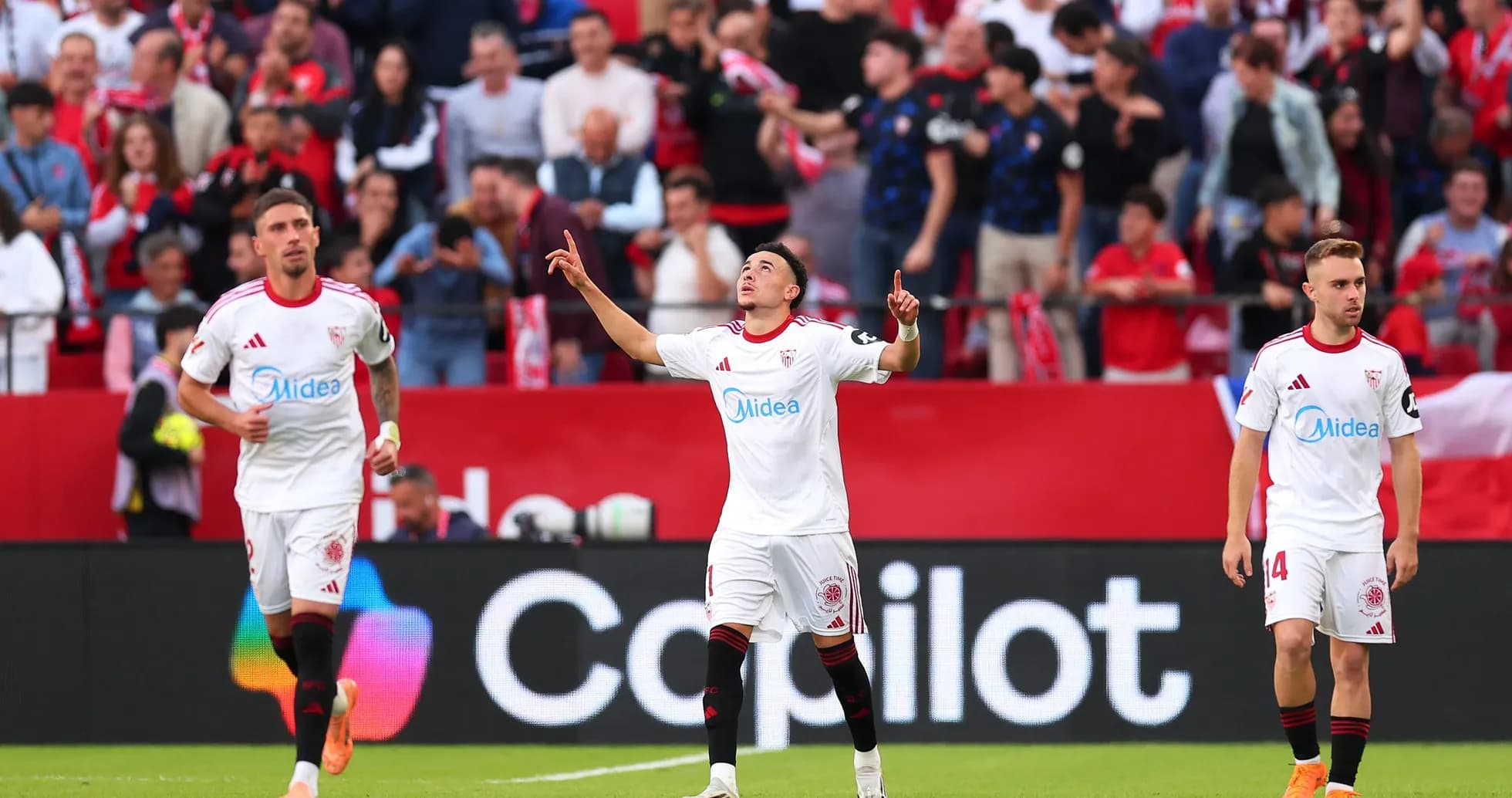
Following this result, the 2-1 scoreline felt like the logical intersection of those trends. Sevilla leaned into their more adventurous home identity, the 4-4-2 giving Romero and Maupay enough service to tilt the balance. Espanyol, organised but limited without Ngonge and Puado, could not quite convert their structured buildup into enough high-quality chances.
Statistical Prognosis
From a statistical prognosis point of view, the underlying season numbers still frame Sevilla as the more volatile but higher-ceiling side: a slightly stronger home attack, the same 1.3 goals conceded at home, and the flexibility to switch shapes. Espanyol remain compact and disciplined, but their away record — 4 wins from 18 and 30 goals conceded — underlines how thin their margin for error is when they leave Barcelona.
Narrative Conclusion
In narrative terms, this match read like confirmation rather than revelation. Sevilla, in front of their own crowd, embraced risk and were rewarded. Espanyol stayed within themselves and were punished for it. In a league table that may ultimately separate them by only a handful of points, this was the afternoon where the numbers found their voice.