San Diego Wave W Defeats Angel City W 2-1: Tactical Analysis
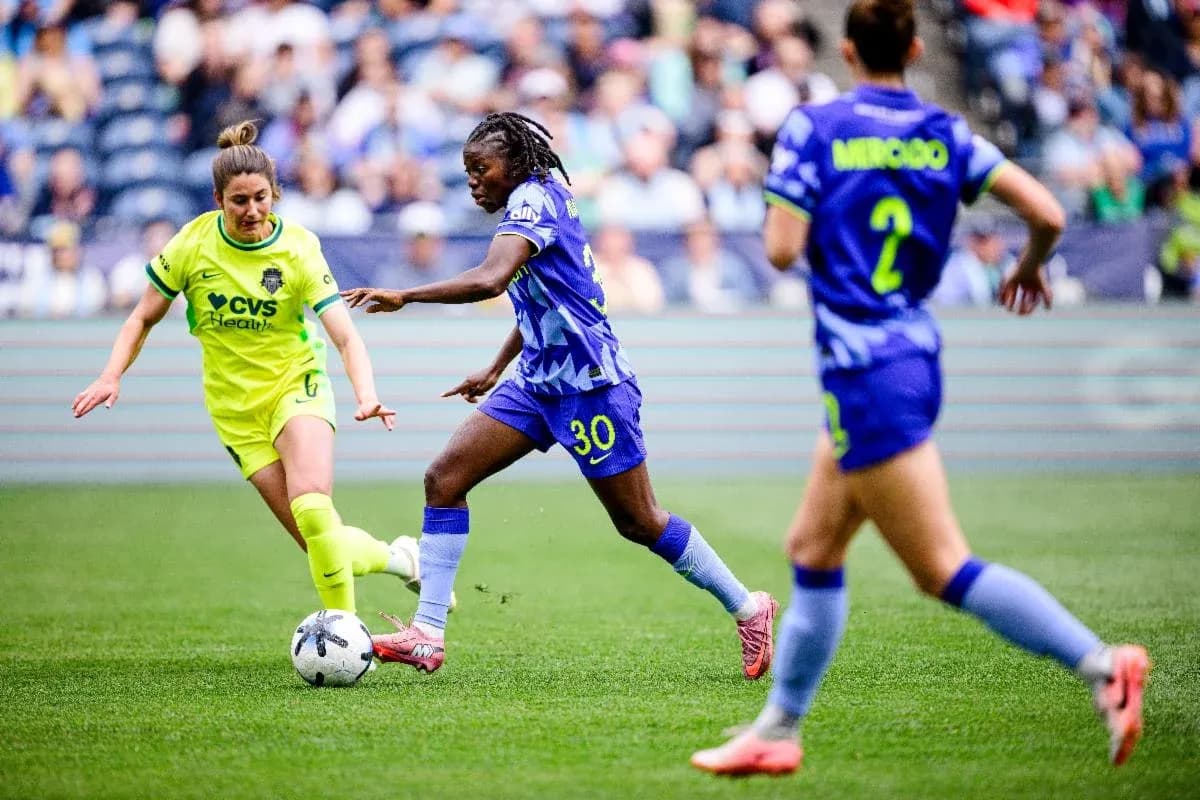
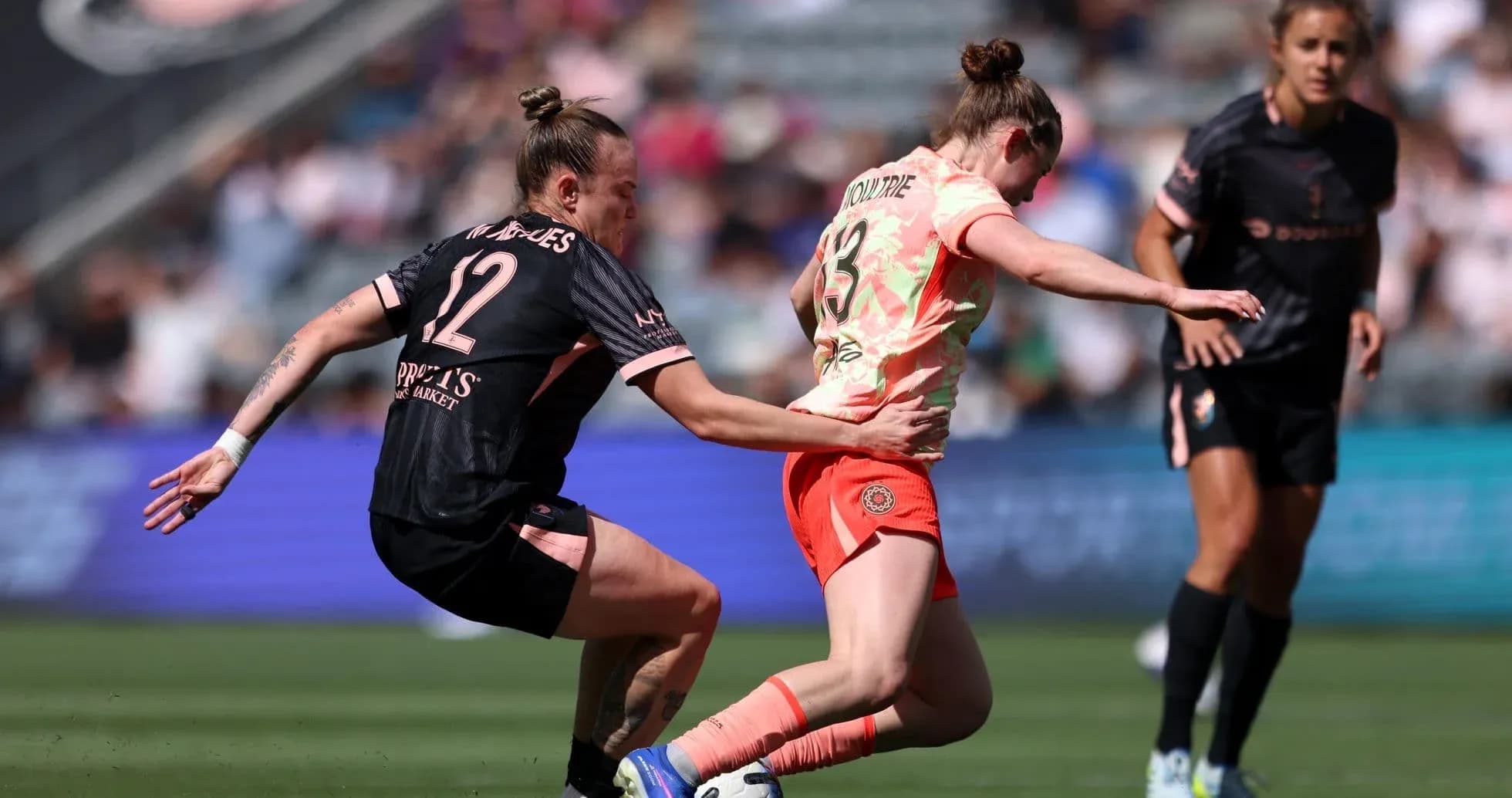
Angel City W’s 1-2 home defeat to San Diego Wave W at BMO Stadium unfolded as a classic contrast of structures: Angel City’s 4-2-3-1 trying to compress the game vertically against San Diego’s more fluid 4-3-3. Over 90 minutes, San Diego’s superior control of tempo and spacing—reflected in 55% possession and cleaner passing—allowed them to absorb Angel City’s direct threats and strike decisively in transition and from wide overloads.
San Diego’s 4-3-3, with DiDi Haracic behind a back four of Amelia Van Zanten, Kennedy Wesley, Kristen McNabb and Perle Morroni, was built on stable rest-defense and disciplined spacing. In front, Kimmi Ascanio, Kenza Dali and Gia Corley formed a three-woman midfield triangle that alternated between a 1-2 and 2-1 shape depending on the ball side. This structure gave them both a free player between Angel City’s double pivot and the ability to immediately counter-press after loss.
Angel City’s 4-2-3-1 under Alexander Straus, with Angelina Anderson in goal and a back four of Gisele Thompson, Emily Sams, Sarah Gorden and Evelyn Shores, leaned heavily on the double pivot of Ary Borges and Nealy Martin. Ahead of them, Kennedy Fuller, Jun Endo and Taylor Marie Suarez supported Sveindís Jónsdóttir as the lone striker. The intention was clear: win second balls, attack quickly into channels, and use Jónsdóttir’s presence to pin San Diego’s centre-backs.
The first half, though not detailed in the events, is logically framed by the statistics: Angel City produced 10 total shots (3 on target) across the match, with 8 inside the box, suggesting their main threat came from direct entries and quick combinations once they managed to break lines. San Diego’s 11 shots (5 on target) were more evenly split between inside (6) and outside (5) the box, consistent with a team that can both circulate patiently and strike from range or cut-backs.
Tactical Changes
The game’s tactical hinge came immediately after halftime. At 46', Angel City W made their first change: Prisca Chilufya (IN) came on for Jun Endo (OUT). This moved Angel City towards a more vertical, winger-driven approach, with Chilufya offering direct penetration and 1v1 threat on the flank. Simultaneously, San Diego Wave W adjusted their midfield and front line: Lia Godfrey (IN) came on for Gia Corley (OUT), and Trinity Paula Byars (IN) came on for Ludmila (OUT), also at 46'. Jonas Eidevall effectively refreshed his attacking lanes and half-space presence right as Angel City tried to tilt the momentum.
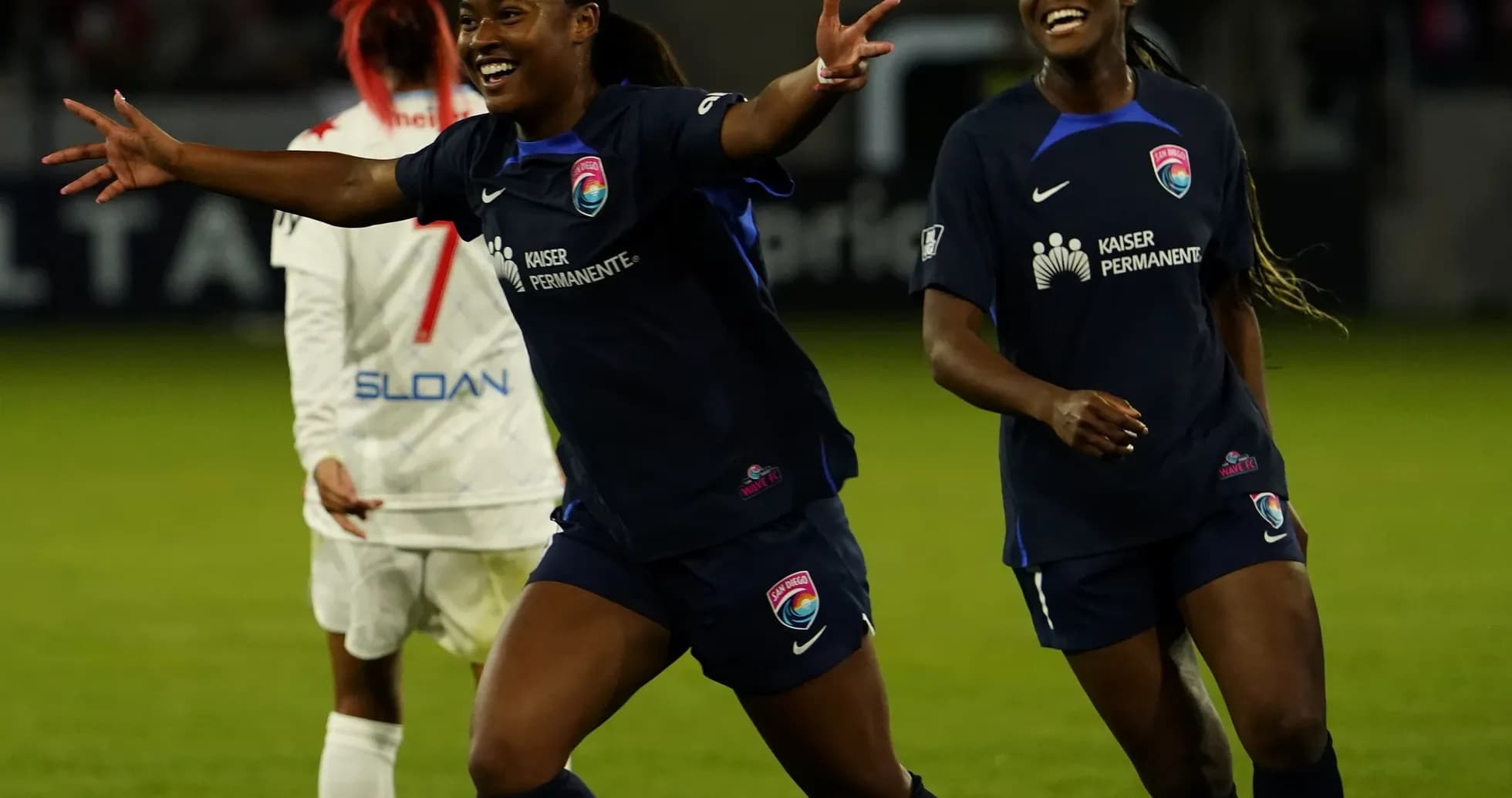
San Diego struck first in this new tactical landscape. In the 49th minute, Dudinha converted for San Diego Wave W, assisted by Kimmi Ascanio. The pattern fits San Diego’s structural strengths: Ascanio, operating as a linking midfielder, likely found space between Angel City’s double pivot and back line, feeding Dudinha attacking the channel. Angel City’s 4-2-3-1, especially after removing Endo, became more stretched between lines, and San Diego exploited that with a vertical pass from midfield into the forward line.
Angel City responded well within their own structural logic. In the 54th minute, Emily Sams scored for Angel City W, assisted by Sarah Gorden. A centre-back scoring, assisted by another defender, strongly suggests a set-piece or second-phase situation—consistent with Angel City’s 7 corner kicks to San Diego’s 1. Here, Angel City’s aerial and physical profile in the back line became an attacking weapon, compensating for their lower share of possession and less refined buildup.
The middle phase of the half was shaped by a sequence of substitutions that redefined both teams’ attacking patterns. At 63', San Diego Wave W brought on Melanie Barcenas (IN) for Gabi Portilho (OUT), refreshing the right-sided threat and adding a more technical wide profile. Angel City W countered at 68' with Riley Tiernan (IN) for Kennedy Fuller (OUT), trading some central creative presence for more direct wing play, and at 76' with Casey Phair (IN) for Taylor Marie Suarez (OUT), further tilting towards a multi-forward, high-occupancy box approach.
San Diego’s decisive tactical move came at 79', when Laurina Fazer (IN) replaced Kimmi Ascanio (OUT). This swap maintained the 4-3-3 but adjusted the midfield’s balance, with Fazer offering fresh legs and potentially more defensive control in front of the back four. Just two minutes later, the structure paid off: in the 81st minute, Amelia Van Zanten scored for San Diego Wave W, assisted by Dudinha. A right-back scoring, assisted by a forward, points to a wide overload or a recycled attack where Dudinha’s positioning drew Angel City’s back line narrow, freeing Van Zanten to arrive from deep. It underscores San Diego’s superior timing of full-back advances and their ability to maintain rest-defense with McNabb, Wesley and the holding midfielder behind the ball.
Angel City’s final throw of the dice came at 88', with Claire Emslie (IN) replacing Nealy Martin (OUT). This was a clear shift away from double pivot control towards maximal attacking width and crossing volume. However, with San Diego already leading and structurally sound, the change increased Angel City’s attacking numbers without restoring central stability.
San Diego’s last change, at 90+5', was Jordan Fusco (IN) for Dudinha (OUT), a classic game-management substitution to add fresh legs in midfield and protect the lead.
Statistical Overview
From a statistical standpoint, San Diego Wave W’s control was methodical rather than overwhelming. They completed 407 passes, 320 accurate (79%), compared to Angel City W’s 320 passes, 231 accurate (72%). The higher volume and accuracy allowed San Diego to dictate tempo, draw Angel City’s 4-2-3-1 out of shape, and create better-structured attacks. Angel City’s 20 fouls to San Diego’s 8 underline how often the home side had to break play to stop transitions or disrupt combinations.
Goalkeeper performance aligns with the tactical story. Angelina Anderson made 3 saves for Angel City W, reflecting San Diego’s 5 shots on target and their capacity to generate clear chances from their possession dominance and wide patterns. DiDi Haracic recorded 2 saves for San Diego Wave W, facing 3 shots on target; Angel City’s threat was more episodic and set-piece-driven rather than sustained.
In synthesis, San Diego Wave W’s 4-3-3, with its superior Overall Form in possession and a solid Defensive Index anchored by their back four and midfield triangle, gradually bent the game to their rhythm. Angel City W’s 4-2-3-1 produced moments of high threat—especially from corners and crosses—but their lower passing accuracy, higher foul count, and late structural gamble left them exposed to the kind of wide, late-arriving full-back run that decided the match at 1-2.