
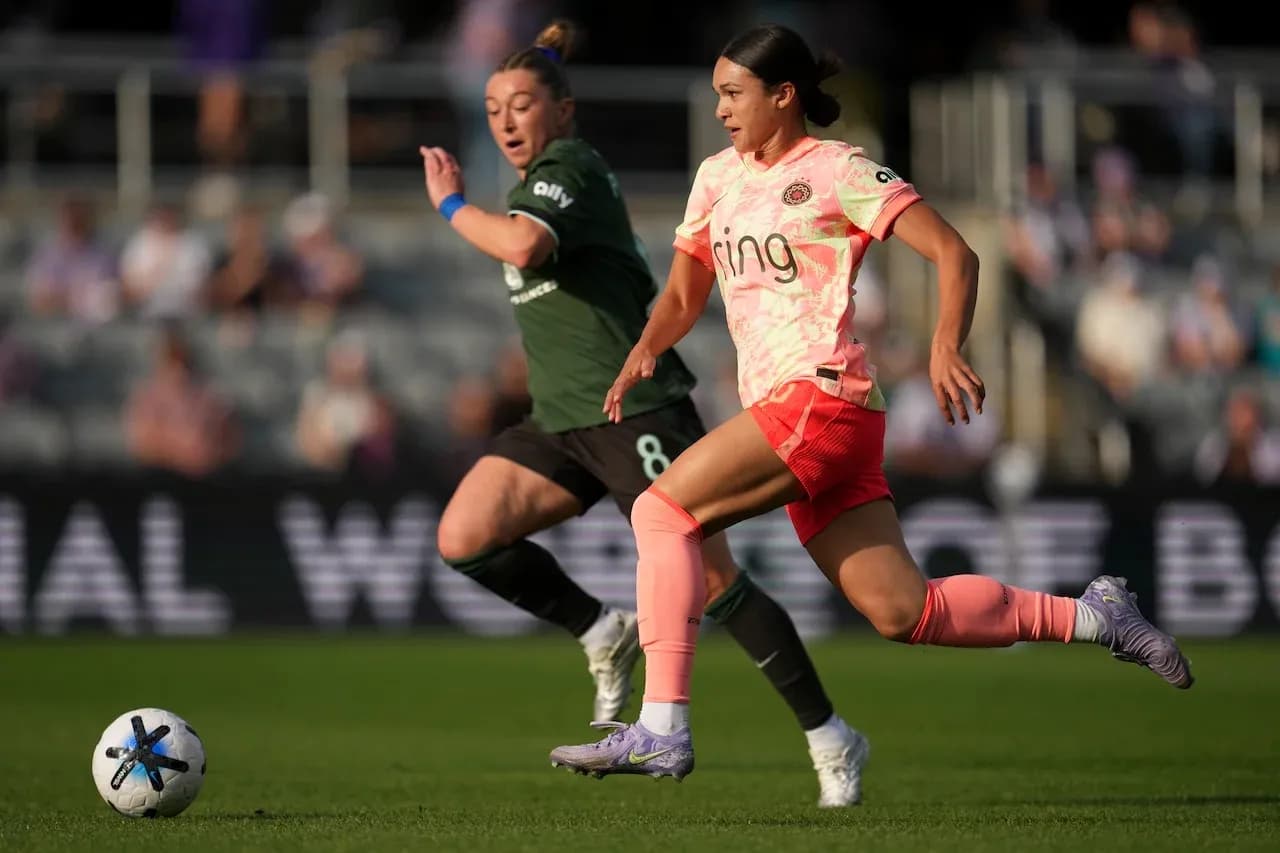
Racing Louisville Stuns Portland Thorns with 3–1 Victory
Under the Friday night lights at Lynn Family Stadium, Racing Louisville W produced the kind of statement performance that can bend a season’s narrative. In a Group Stage clash of the NWSL Women, the league’s bottom side on 7 points stunned leaders Portland Thorns W 3–1, overturning a 1–1 half-time scoreline to protect their perfect home record and puncture Portland’s aura of inevitability.
I. The Big Picture – a table‑topper tripped in Louisville
Following this result, Racing remain 14th but now carry a very different complexion: in total this campaign they have 2 wins, 1 draw and 5 losses from 8, yet all of that positivity is concentrated in Kentucky. At home they have played 3, winning 2 and drawing 1, with 8 goals for and 5 against. The raw numbers sketch a clear identity: this is a home‑heavy side, averaging 2.7 goals for and 1.7 against at Lynn Family Stadium, living off front‑foot football and willing to trade punches.
Portland arrive from the opposite end of the spectrum. They stay 1st with 19 points from 9 matches, their overall goal difference of 6 built on 15 goals scored and only 9 conceded. On their travels they had been solid if not invincible: 6 away matches, 3 wins, 1 draw, 2 defeats, 9 goals for and 9 against, an away average of 1.5 scored and 1.5 conceded. This was supposed to be another step in a promotion push towards the NWSL Women Play Offs quarter‑finals. Instead, it became a reminder that even the league’s most balanced machine can be rattled by a team that plays with nothing to lose.
Both coaches mirrored each other on the board, sending their teams out in 4‑2‑3‑1 shapes. Beverly Yanez leaned into Racing’s established identity – this was their seventh match in this structure in total – while Robert Vilahamn trusted the Thorns’ most-used system, a 4‑2‑3‑1 that has underpinned 6 of their 9 league fixtures.
II. Tactical Voids and Discipline – where the game frayed
There were no listed absentees in the pre‑match data, so this was close to full‑strength against full‑strength, and the tactical voids emerged from the pitch rather than the team sheet.
For Racing, the season‑long story had been defensive fragility and ill‑timed bookings. In total this campaign they have conceded 15 goals in 8 matches, an average of 1.9 per game, and they have yet to keep a single clean sheet. Their yellow‑card timing is scattered, but there is a late‑game spike: 27.27% of their cautions arrive between 91–105 minutes, underlining how often they have been forced into desperate defending to see out results.
Portland’s disciplinary profile is sharper, almost aggressive by design. In total they have 5 clean sheets and have failed to score in none of their 9 games, but that control is offset by a hard edge: their yellow cards are distributed across all phases, with 20.00% each in 0–15, 31–45, 61–75 and 76–90. More telling are the reds. Reyna Reyes sits in the league’s red‑card list with 1 dismissal, and Cassandra Bogere’s record includes a yellow‑red combination. The season data confirms it: 50.00% of Portland’s reds come in the opening 0–15 minutes, and 50.00% between 46–60. This is a team that walks the line in transition moments, and against a Racing side that thrives on chaos at home, that edge became a liability rather than a weapon.
III. Key Matchups – Hunter vs Shield and the Engine Room
The “Hunter vs Shield” narrative was clear before a ball was kicked. Portland brought two of the league’s most dangerous attacking midfielders: Reilyn Turner and Olivia Moultrie. Turner, with 4 goals in 8 appearances, is a penalty‑box predator who thrives on late runs and duels – she has won 51 of 80 duels in total and attempted 18 dribbles, succeeding 10 times. Moultrie, also on 4 goals in total and topping the assist charts with 4, is the creative axis, delivering 22 key passes and 13 shots (9 on target). Between them and the multi‑functional Pietra Tordin – 3 goals and 3 assists in total, plus 11 shots and 10 key passes – Portland’s front four were built to probe Racing’s soft underbelly.
The shield they faced, however, was not a traditional low block but a combative, mobile unit anchored by Taylor Flint and Katie O’Kane in front of a back four led by Arin Wright and Courtney Petersen. Flint’s season numbers underline her dual role: 2 league goals in total, 324 passes and a remarkable 27 interceptions, plus 10 blocked shots – every one of those blocks a successful intervention. O’Kane adds balance and bite, with 15 tackles and 5 successful dribbles in total, and a willingness to take bookings (2 yellows in total) to halt counters.
Higher up, Racing’s own “Hunter” was Sarah Weber. In total this campaign she has 3 goals and 1 assist from 7 appearances, with 5 shots on target from 8 attempts. Her movement across the front line in this 4‑2‑3‑1 stretched Sam Hiatt and Carolyn Calzada into wide channels they did not want to defend, especially as full‑backs Petersen and Quincy McMahon pushed high.
Behind Weber, Kayla Fischer and Ella Hase formed a restless band of creators. Fischer’s season profile – 2 assists, 12 key passes and 26 dribble attempts with 12 successes – translated on the night into constant pressure on Portland’s double pivot of Jessie Fleming and Bogere. Fleming, tidy in possession and with 195 passes at 77% accuracy in total, was repeatedly forced backwards, unable to connect quickly with Moultrie and Tordin between the lines.
The engine‑room duel was, in many ways, the game’s hinge. Portland’s pivot is built to recycle and press, but against Racing’s more vertical trio of Flint, O’Kane and Makenna Morris, they found themselves outnumbered in transition. Every Racing regain became a direct thrust into the space in front of Hiatt and Calzada, and with Weber and Fischer running off shoulders, the Thorns’ previously stingy defensive record – only 9 goals conceded in total before this match – suddenly looked vulnerable.
IV. Statistical Prognosis – xG, trends and what this result really says
Even without explicit xG values, the season data allows a tactical reading of the underlying chances. Heading into this game, Racing’s overall goals‑for average of 1.6 and goals‑against of 1.9 painted them as a team whose matches tend to be open and chance‑rich. At home, that attacking number spikes to 2.7, suggesting that their xG at Lynn Family Stadium regularly exceeds two, driven by aggressive full‑backs, a high number 10 and a penalty threat. Their penalty record in total – 2 taken, 2 scored, 100.00% conversion, 0 missed – reinforces the idea that they reliably turn pressure into high‑value opportunities.
Portland, by contrast, had been the league’s model of controlled efficiency. In total they averaged 1.7 goals for and just 1.0 against, with 5 clean sheets and no matches without scoring. Their single penalty this season was converted, and their away profile – 1.5 goals for and 1.5 against – suggested that on their travels, matches sit closer to parity in xG terms than their home dominance would imply.
Overlay those trends onto this 3–1 scoreline and a picture emerges: Racing dragged the game into their preferred volatility zone. The Thorns’ usually compact 4‑2‑3‑1 was stretched horizontally by Racing’s wide attacking midfielders and vertically by Weber’s runs, creating more and better shooting positions than Portland are accustomed to conceding. Given Racing’s home scoring average and Portland’s away concession rate, a multi‑goal output for the hosts always sat within the statistical envelope; the surprise was not that Racing scored, but that Portland’s own attack was held to a single strike despite their season‑long record of never failing to score.
Following this result, the prognosis for both squads shifts subtly. Racing’s home‑heavy, high‑risk identity has been vindicated; their 0 total clean sheets remain a concern, but if they continue to generate chances at a rate consistent with 2.7 home goals per game, they can drag themselves away from the foot of the table. Portland, meanwhile, must confront a more fragile reality: on their travels, they are closer to the pack than their league‑leading status suggests, and their disciplinary edge – red cards clustered in critical phases, yellow cards spread across the match – threatens to erode the defensive solidity that made them favourites.
In narrative terms, this was more than an upset. It was a tactical clash in which Racing’s chaotic, front‑foot football exposed the limits of Portland’s structure, and a reminder that in a league where the margins are increasingly defined by pressing intensity and transition speed, even the top seed can be out‑run and out‑fought on a single night in Louisville.