New York RB II Dominates Toronto II in MLS Next Pro Clash
York Lions Stadium felt like a proving ground rather than a neutral backdrop as Toronto II and New York RB II walked out for this MLS Next Pro Group Stage clash. The table context was stark. Following this result, New York RB II’s dominance at the top of the Eastern Conference was underlined: 23 points from 9 matches, with a commanding overall goal difference of +13 (22 goals for, 9 against in the standings block; 22 for and 11 against in the statistics snapshot, a discrepancy that still frames them as comfortably positive). Toronto II, by contrast, sat 10th in the Eastern Conference on 11 points from 9 games, their overall goal difference in the standings at -1 (14 scored, 15 conceded), and their season form line “LLLWLWWLL” betraying a team still searching for consistency.
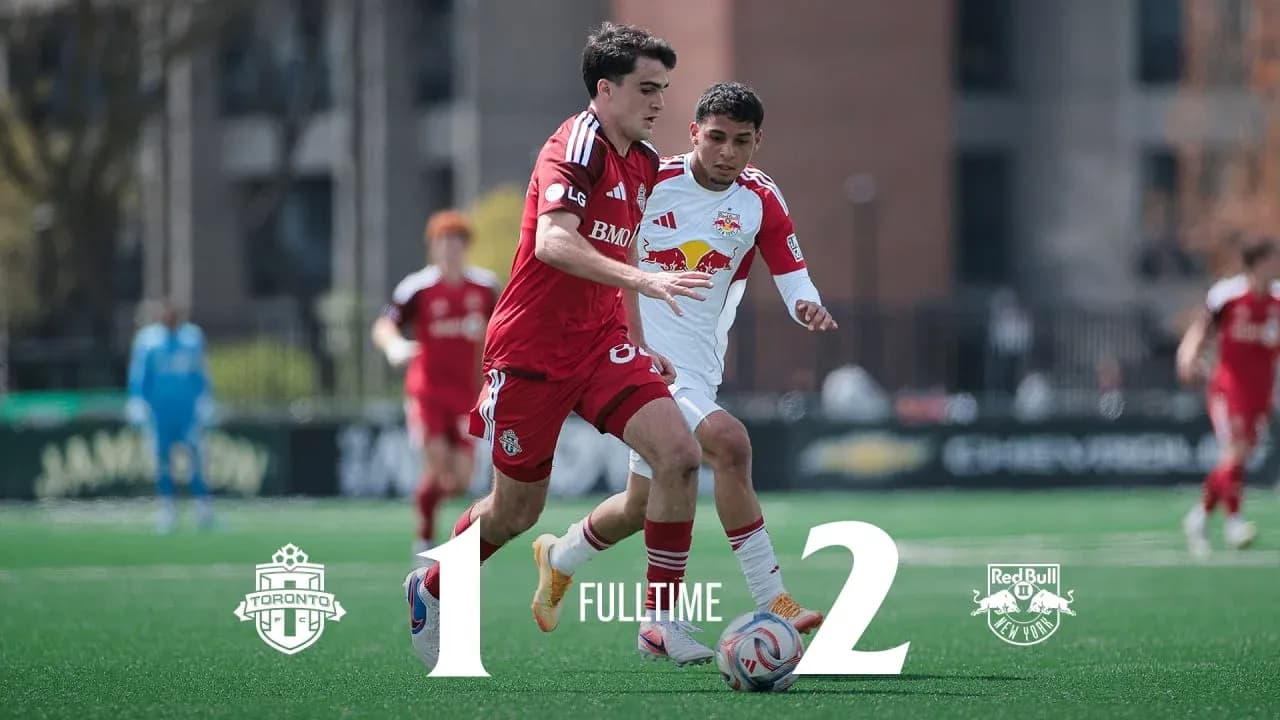
Final Score: Toronto II 1–2 New York RB II
The final score – Toronto II 1–2 New York RB II – fit the broader seasonal pattern. New York RB II have been ruthless across their 9 fixtures, with 7 wins and no draws, and an overall attacking output of 22 goals at an average of 2.4 per game. On their travels, they have been more pragmatic but still effective: 7 away goals in 4 matches at an average of 1.8, conceding 5 away at 1.3 per game. Toronto II, meanwhile, are a different side at York Lions Stadium compared to their travels. At home, they have scored 7 goals in 4 fixtures at an average of 1.8, conceding 7 at the same 1.8 clip. Away, their fragility is more pronounced: 7 scored and 10 conceded in 5 games, with away averages of 1.4 for and 2.0 against.
Within that structural imbalance, the lineups told a story of youth and experimentation. Gianni Cimini’s Toronto II side leaned into academy energy: A. De Rosario and D. Dixon as attacking reference points, supported by the likes of R. Campbell-Dennis, S. Pinnock, and E. Khodri. In midfield, B. Boneau and T. Fortier were tasked with bridging phases and protecting a back line anchored by R. Fisher, J. Gilman, and L. Costabile in front of A. Bossenberry. On the bench, there was pace and unpredictability in K. Kerr and Z. Nakhly, plus the physical presence of S. Sappleton and the late-game legs of L. Dawson and D. Eniang-Olatunji.
New York RB II arrived with the swagger of league leaders. Their starting XI blended technical profiles and direct runners: T. Szewczyk and M. Jimenez offering attacking threat, supported by the creative touches of D. Gjengaar and A. Rojas. In deeper zones, A. Modelo and A. Sanchez provided the platform, while J. Masanka Bungi and N. Worth helped manage transitions. D. Cadigan and D. Nelich rounded out a group that looked built for the Red Bulls’ trademark high press. Crucially, the bench contained one of the league’s most intriguing young defenders in Shunya Sakai, whose presence in the top-scorer, top-assist, and disciplinary leaderboards signals how closely his development is being tracked, even if his statistical output is still embryonic.
Tactically, this fixture was always likely to hinge on how Toronto II’s home attacking profile would cope with New York RB II’s defensive structure. Heading into this game, Toronto II’s overall goals for average of 1.6 per match was offset by an overall goals against average of 1.9, a negative defensive tilt that demands they outscore opponents to win. At home, their 1.8 goals scored per match offered optimism, but conceding 1.8 at York Lions Stadium left little margin for error against a side that, overall, concedes just 1.2 goals per game.
New York RB II’s defensive resilience is not built on clean sheets alone – they have only 1 overall – but on control of game state. They have not failed to score in any of their 9 fixtures, and with both sides perfect from the spot (each 1 penalty taken and 1 scored, 100.00% conversion, no misses), the margins around open play become critical. The Red Bulls’ card profile adds another layer of narrative: a pronounced late-game spike, with 40.00% of their yellow cards arriving between 76–90 minutes and a further 10.00% between 91–105. That pattern suggests a team that pushes the physical and tactical limits in closing phases, often protecting leads or killing transitions. Toronto II’s yellow card distribution is more evenly spread, with a notable 30.77% between 31–45 and 23.08% from 76–90, pointing to a side that can become reactive when games stretch before and after the interval.
In this context, the “Hunter vs Shield” matchup was less about one individual and more about collective profiles. New York RB II’s attack, averaging 3.0 goals per game at home and 1.8 away, confronted a Toronto II defense that overall concedes 1.9 per match and has already suffered heavy defeats – including a 5–0 away loss and a 3–4 home reverse as their biggest losing scorelines. The Shield, such as it was, depended on Boneau and Fortier screening in front of Fisher and Gilman, and on Toronto II’s ability to keep the ball away from their own third. Every turnover was a potential trigger for Szewczyk, Gjengaar, or Jimenez to exploit.
The “Engine Room” duel centered on how Toronto II’s midfield could cope with the Red Bulls’ press. Without a defined playmaker in the data, the responsibility was shared: Boneau’s passing lanes versus the counter-pressing of Modelo and the ball-winning instincts of Sanchez. For New York RB II, the task was to suffocate Toronto II’s build-up from Bossenberry through Costabile and Fisher, forcing long, hopeful balls towards De Rosario and Dixon. For Toronto II, it was about breaking that first line and finding Khodri and Pinnock between the lines quickly enough to attack before the Red Bulls could reset.
From a statistical prognosis perspective, the final 2–1 scoreline mirrored the underlying trend lines. New York RB II’s superior attacking averages and relentless form – “WWWWW” in the standings snapshot – pointed towards them generating the higher xG profile, even if the raw xG numbers are not provided. Toronto II’s home scoring rate of 1.8 made a single goal plausible, but their habit of conceding close to 2 per game overall left them exposed to exactly the sort of narrow defeat that unfolded.
Following this result, the narrative is clear. Toronto II remain a volatile, high-variance side: capable of scoring, but too porous to consistently protect leads or even parity. New York RB II, meanwhile, look every inch a promotion contender: a team whose attacking depth, pressing identity, and late-game intensity continue to bend tight matches in their favor, even in hostile environments like York Lions Stadium.