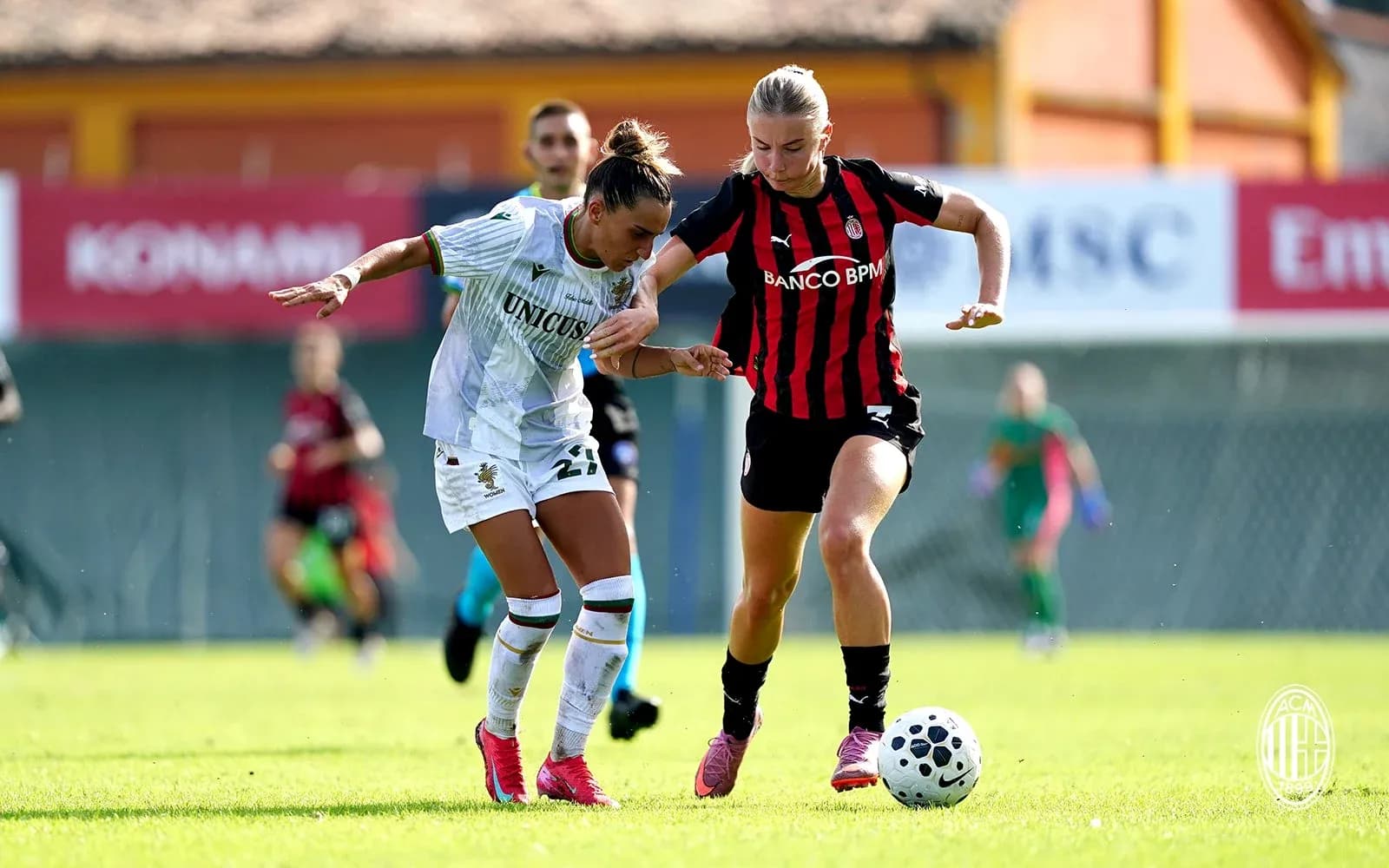
Juventus W vs Inter Milano W: A Thrilling 3-3 Draw
On a cool afternoon at Stadio Vittorio Pozzo in Biella, Juventus W and Inter Milano W produced a 3-3 spectacle that felt less like a routine league outing and more like a statement about the balance of power in Serie A Women. Following this result, the table still shows Inter in 2nd on 44 points and Juventus in 3rd on 36, but the ninety minutes told a story of two sides whose seasonal identities collided head‑on.
Heading into this game, the numbers framed a clear contrast. Inter were the division’s most explosive attack: 49 goals in total from 21 league matches, powered by a ruthless average of 2.5 at home and 2.2 on their travels. Juventus, by comparison, were more measured – 30 goals overall at 1.5 at home and 1.3 away – but with a defensive record that had underpinned their Champions League push, conceding only 18 in total at an average of 0.7 at home and 1.0 away.
Yet by half-time in Biella, that defensive reputation had been shredded. The 3-3 score at the interval spoke of a Juventus back line that had been pulled apart by Inter’s layered attacking structure, and of an Inter defence that could not live with Juve’s directness and vertical running.
Starting XI
Max Canzi’s starting XI for Juventus – with D. de Jong in goal and a defensive unit built around M. Lenzini, V. Calligaris, M. Harviken and E. Carbonell – looked, on paper, like a continuation of the flexible back-three/back-four shapes they have used most often (3-4-1-2 and 4-3-3 being their most common lineups this season). In midfield, L. Thomas, L. Wälti and E. Schatzer formed the spine, with A. Vangsgaard, B. Bonansea and A. Capeta tasked with stretching Inter’s last line.
Opposite, Gianpiero Piovani leaned into Inter’s season-long attacking strength. C. Runarsdottir anchored a back line including B. Glionna, K. Bowen, Ivana and E. Bartoli, with C. Robustellini and M. Detruyer providing legs and balance around the creative fulcrum L. Magull. Ahead of them, K. Vilhjalmsdottir, H. Bugeja and the league’s standout attacker T. Wullaert formed a fluid front trio.
The absence list was officially blank, but the tactical voids were visible in the way both midfields were stretched. Juventus leaned heavily on Wälti’s positional intelligence to knit together phases and protect transitions. Her season numbers – 379 passes at 88% accuracy, 22 tackles and 9 interceptions in 613 minutes – underline how much of their structure runs through her. When Inter managed to pull her out of the central lane, Juventus’ back line suddenly looked exposed.
Discipline Profile
Inter’s own discipline profile hinted at the edge they bring to these big games. Across the season, their yellow cards cluster in the 31-45 minute window (25.93%) and then again between 61-90 minutes (a combined 37.04%), while their only red card has arrived late, in the 76-90 range. It is a side that pushes the line of aggression in the very phases where matches often tilt. Juventus, by contrast, see their yellows peak between 46-75 minutes (a combined 60.86%), suggesting a team that reacts to game state and pressure rather than setting the tone early.
In Biella, that translated into a midfield battle where the tackles bit harder as the first half wore on, and where every transition felt like it might end in a card or a chance. With no red cards for Juventus this season and Inter’s disciplinary danger embodied by defenders like M. Milinković – 2 yellows and 1 red across the campaign, plus 6 blocked shots – the risk-reward balance in Inter’s back line is a constant subplot. Even though Milinković was not in this particular matchday squad, Ivana’s presence in the XI carried its own warning: 4 yellow cards, 17 tackles, 7 blocked shots and 21 interceptions, a defender who lives on the front foot.
Key Players
The “Hunter vs Shield” duel in this fixture was unmistakable: T. Wullaert, the league’s leading scorer and creator, against a Juventus defence that, heading into this game, had conceded only 8 at home. Wullaert’s season line – 10 goals, 7 assists, 27 key passes, and 3 penalties scored but 1 missed – defines Inter’s attacking ceiling. Her missed penalty this season is a reminder that even the division’s most reliable finisher has a crack in the armour, but it also underlines Inter’s willingness to lean on her in the highest-pressure moments.
Around her, the supporting cast is formidable. H. Bugeja’s 6 goals and 2 assists in just 635 minutes, combined with 14 dribble attempts, give Inter a direct runner who can attack the half-spaces between full-back and centre-back. L. Magull, with 4 assists and 20 key passes, is the metronome and line-breaker, while M. Detruyer’s 4 assists and 11 tackles add both creativity and bite. In Biella, that network of passing and movement repeatedly dragged Juventus’ shape out of alignment, especially between the lines where Wälti could not cover everything at once.
For Juventus, the attacking narrative is more distributed. C. Beccari, not in this particular XI, has been one of their most incisive outlets with 4 goals, 19 shots and 16 key passes across the season. In her absence, A. Capeta and B. Bonansea carried the burden of stretching Inter vertically, while Vangsgaard’s presence suggested a plan built on aerial duels and second balls. The midfield creativity again flowed from Wälti, whose 12 key passes and 3 assists this season frame her as the “Engine Room” figurehead, both playmaker and enforcer.
Discipline Challenges
Discipline-wise, Juventus walk a thin line through Wälti as well. Her 5 yellow cards make her one of the league’s most frequently booked players; she is both the shield and the potential flashpoint. On the Inter side, Ivana’s 4 yellows and Milinković’s red across the campaign underline a back line that will accept cards as the cost of holding a high line and defending aggressively in duels.
From a statistical prognosis standpoint, the draw in Biella looks like the meeting point of two trends. Inter’s total goal difference of 26 (49 scored, 23 conceded) reflects a team whose xG profile is likely tilted heavily towards attack, while Juventus’ goal difference of 12 (30 scored, 18 conceded) suggests a more balanced, control-oriented side. A 3-3 scoreline between them is almost the literal midpoint of those identities: Inter dragging the match into chaos, Juventus trying to structure it but being forced to trade punches.
Looking ahead, the tactical lessons are clear. Juventus must find ways to preserve Wälti’s influence deeper while adding an extra progressive passer – perhaps via A. Brighton, whose 88% pass accuracy and 4 key passes hint at a calmer distribution profile – to share the load. Inter, meanwhile, will feel vindicated in their high-risk, high-reward approach, but Piovani will know that a side which concedes 15 goals on their travels, at an away average of 1.4, will always leave the door open for opponents of Juventus’ calibre.
Following this result, the league table still favours Inter in the race behind the leaders, but Biella offered a glimpse of what awaits if these two collide again in a decisive fixture: Wullaert’s relentless hunting against Wälti’s organising shield, Magull’s craft against Juventus’ compact blocks, and a disciplinary tightrope that could tip the balance with a single mistimed challenge in the 76-90 minute surge where both sides so often live on the edge.