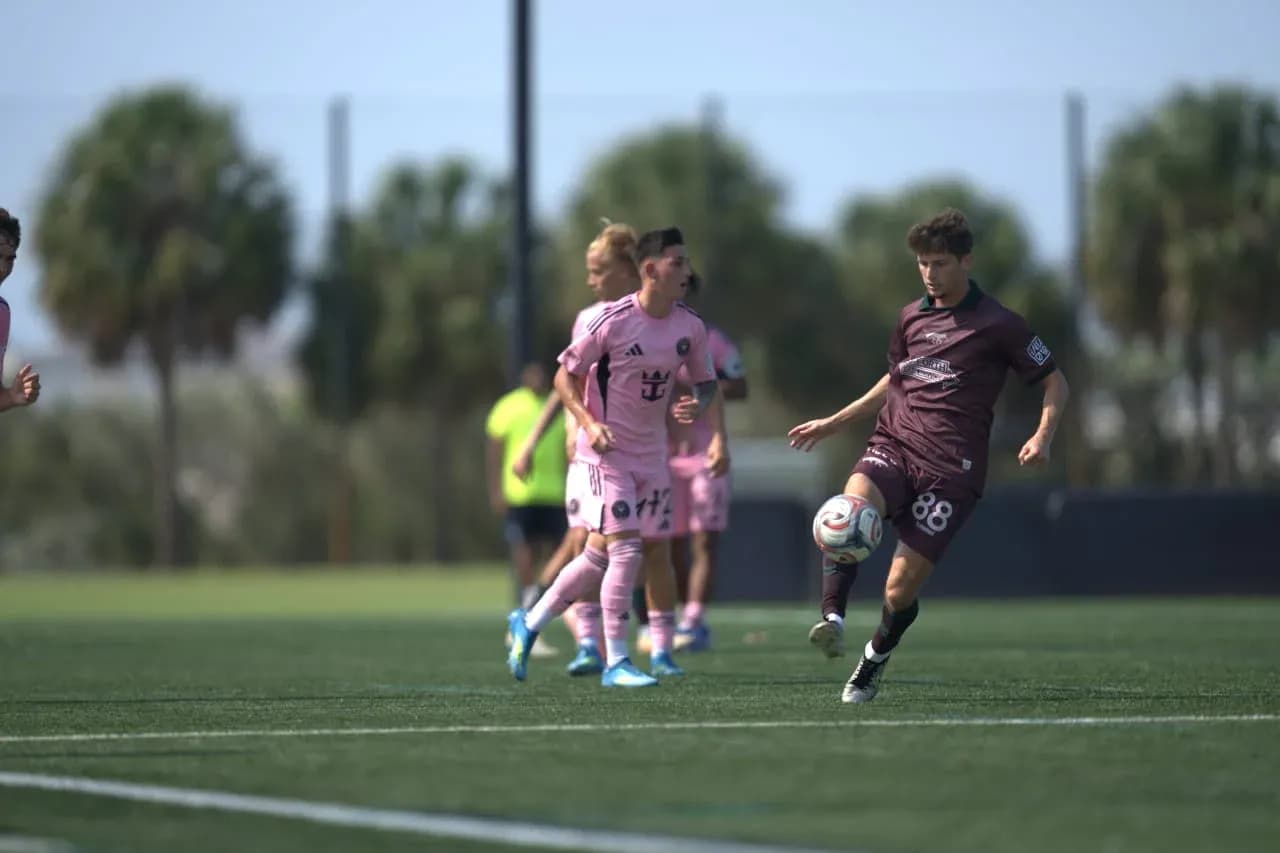
Inter Miami II vs Chattanooga: Tactical Analysis of a Close Match
Under the lights at Chase Stadium, this MLS Next Pro Group Stage meeting felt, on paper, like a mismatch: Inter Miami II, bottom of their Central Division mini-table and 16th in the Eastern Conference, hosting a Chattanooga side sitting 4th in the Central and 8th in the conference, already within the promotion playoff slots. Yet the final scoreline – Inter Miami II 1–2 Chattanooga – told a subtler story of a fragile home side that started brightly, then were gradually strangled by a more mature, opportunistic visitor.
Heading into this game, Inter Miami II had endured a brutal campaign. Overall they had played 9 matches, winning just 1 and losing 8, with 10 goals for and 23 against in the standings snapshot, a goal difference of -13. The broader statistics sharpen that picture: in total this campaign they had scored 11 goals and conceded 25, for an average of 1.2 goals for and 2.8 against per match. At home specifically, they averaged 1.0 goal for and 2.5 against, with 4 home defeats from 4 and no clean sheets. Chattanooga arrived with a very different profile: 4 wins and 5 losses from 9, 15 goals scored and 15 conceded overall in the standings (a flat goal difference of 0), supported by season stats of 15 for and 16 against, averaging 1.7 scored and 1.8 conceded per game. On their travels they had been streaky – 1 away win and 3 away losses – but still more balanced than their hosts.
I. The Big Picture: Structure and Seasonal DNA
Inter Miami II’s lineup, under coach Raul Ledesma Cristian, was youthful and fluid, nominally lacking a listed formation but hinting at a possession-first identity. M. Marin anchored from the back, with a defensive cluster built around T. Hall, D. Sumalla, N. Almeida and C. Abadia-Reda. In front of them, the spine of T. Vorenkamp and I. Urkidi offered progression, while the attacking trident of J. Convers, I. Zeltzer-Zubida and M. Saja looked to feed off the creativity and dribbling of S. Morales.
Chattanooga, by contrast, projected solidity and experience. E. Jakupovic in goal gave them a calm base, shielded by a back line including T. Robertson, F. Sar-Sar, M. Hanchard and A. Sorenson. In midfield, L. Husakiwsky and I. Jones formed the workmanlike core, while the attacking band of D. Barker, D. Mangarov and A. Gordon supported A. Krehl up front. The visitors’ seasonal numbers underline their dual nature: capable of explosive attacking spells (a biggest home win of 4–2, and an away high of 2 goals) but always living close to the edge defensively.
II. Tactical Voids and Discipline
Without explicit injury or suspension data, the tactical voids in this match are more structural than personnel-based. Inter Miami II’s season-long inability to keep clean sheets – 0 in total, both home and away – is not just a defensive issue but a psychological one. The back line around Marin has grown used to chasing games rather than managing them, and that fragility inevitably shaped their approach once Chattanooga began to tilt the momentum.
Discipline has been another recurring fault line for the hosts. Across the season, their yellow cards cluster in the 46–60 and 76–90 minute windows, each carrying 26.09% of their total cautions. That pattern suggests a side that loses control both right after half-time and in the closing stages, either through fatigue or emotional spikes. More telling still is their red-card profile: 100.00% of their reds have arrived between 76–90 minutes. Even without a specific sending-off noted here, that history hovers over every late-game duel, pushing defenders like Sumalla and Almeida into a dilemma between aggression and caution.
Chattanooga’s disciplinary map is different but equally revealing. Their yellow cards peak in the 31–45 and 76–90 minute bands, each with 26.32% of their total. They tend to tighten the screws just before the interval and again as the match stretches into its decisive phase. Their red cards are split evenly: 50.00% between 61–75 minutes and 50.00% between 76–90. This is a side that is prepared to walk the disciplinary tightrope in the second half to protect a lead or swing a contest.
III. Key Matchups: Hunter vs Shield, Engine Room
The “Hunter vs Shield” dynamic here was less about a single star finisher and more about collective patterns. Inter Miami II, averaging 1.0 home goals, rely on shared responsibility in the final third. Morales, Saja and Convers had to find pockets between Chattanooga’s lines, testing a defense that concedes 1.8 goals per match overall and 1.8 both at home and away on average. Chattanooga’s back four, with Sar-Sar and Hanchard central, were tasked with turning that statistical vulnerability into something more resilient on the night.
Conversely, Chattanooga’s attack – 2.0 goals per game at home and 1.3 on their travels – is anchored by the interplay between Mangarov, Barker and Gordon, with Krehl as the reference point. Against an Inter Miami II defense that concedes 2.5 at home and 3.0 on their travels, this front line only needed brief windows of superiority to tilt the match. The visitors’ biggest away win of 1–2 mirrors the final score here: an efficient, opportunistic pattern where they accept being outplayed in phases but strike decisively when space opens.
The “Engine Room” battle revolved around how Vorenkamp and Urkidi could cope with the work rate of Husakiwsky and Jones. Inter Miami II’s season-long form line – LLLLWLLLL – shows a side that often fades under sustained pressure. Chattanooga’s own form, LWLLWWLLW, is chaotic but underpinned by the ability to string wins together when they find rhythm. In this match, the visitors’ midfield edge in duels and second balls gradually starved Inter Miami II’s front line, forcing Morales and Saja to drop deeper and blunting the hosts’ early incision.
IV. Statistical Prognosis and Tactical Verdict
Following this result, the statistical trajectories of both teams were reinforced rather than rewritten. Inter Miami II’s habit of scoring but still losing at home persisted; their attacking average of 1.0 at home is simply overwhelmed by the 2.5 they concede. Chattanooga, meanwhile, continued to live on that knife-edge where their 1.7 goals scored and 1.8 conceded per match are separated by details of game management.
In Expected Goals terms, the profile of this contest points to Chattanooga edging the quality of chances despite Inter Miami II’s periods of possession and territorial pressure. The visitors’ season-long 100.00% penalty conversion rate hints at a ruthlessness in high-leverage moments; even without a spot-kick here, that mentality carried into open play. Inter Miami II, by contrast, have yet to win a penalty this campaign and have no margin for error in either box.
Tactically, the match can be read as a case study in how a mid-table playoff contender manages volatility better than a struggling developmental side. Chattanooga absorbed an early storm, trusted their structure, and leaned on the experience of Jakupovic and the spine in front of him to keep the game within reach. When the chances came, their front four punished a defense that statistically concedes almost three goals per match overall.
For Inter Miami II, the 1–2 defeat encapsulates their season: flashes of promise from Morales, Saja and Convers, encouraging combinations through Vorenkamp and Urkidi, but undermined by a defensive unit that bends too easily and a disciplinary profile that makes late-game composure a recurring question. For Chattanooga, this away win at Chase Stadium feels less like a statement and more like a confirmation – a team whose numbers say “dangerous but flawed” continuing to find ways to stay on the right side of fine margins, and to keep their place in the Eastern Conference playoff picture intact.