Huntsville City Dominates Carolina Core in MLS Next Pro Match
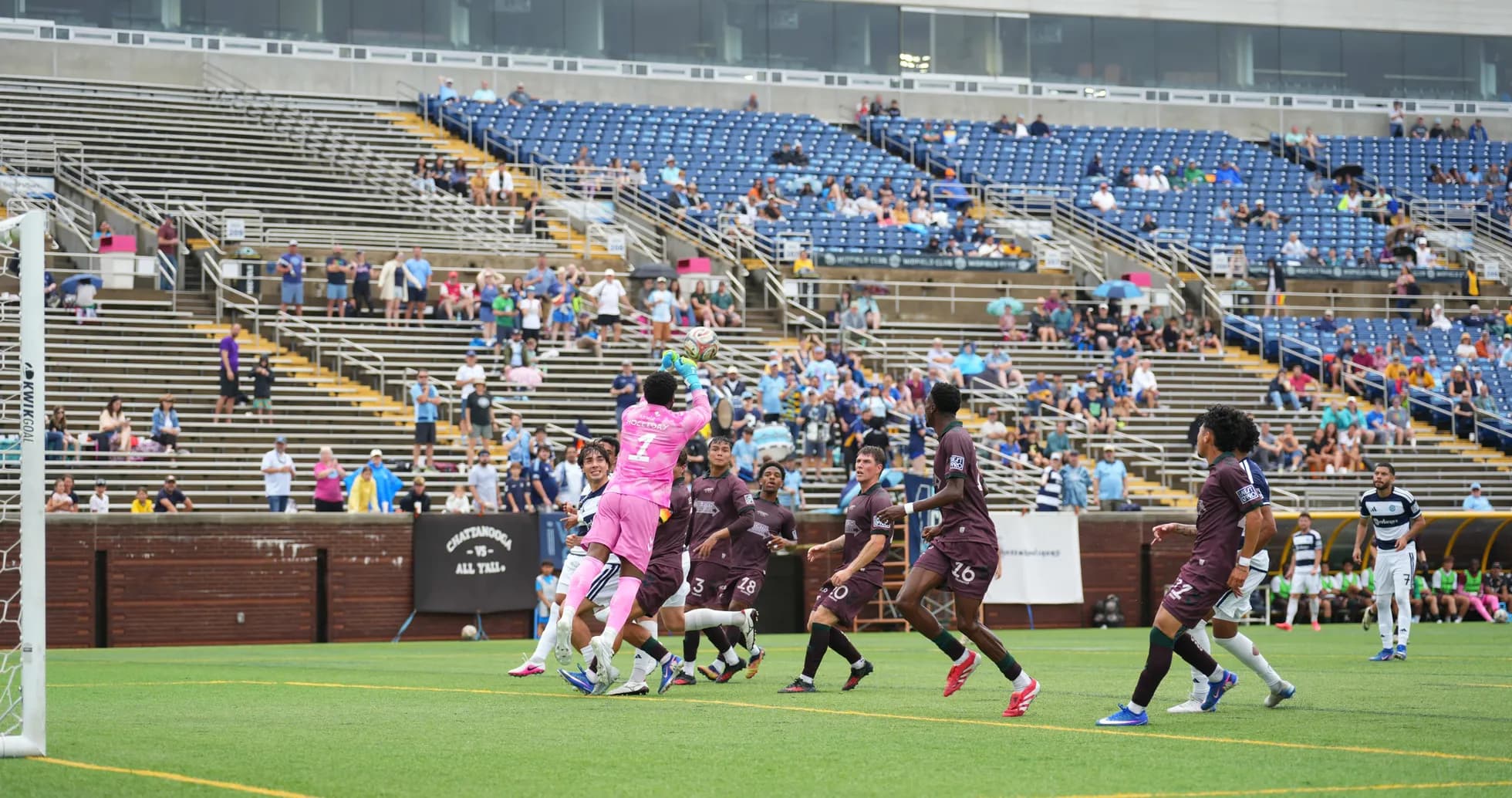
Under the Friday night lights at Joe W. Davis Stadium, Huntsville City’s 3–0 dismantling of Carolina Core felt less like a routine group-stage win and more like a statement about where these two projects stand in MLS Next Pro’s 2026 landscape.
I. The Big Picture – contrasting trajectories
Following this result, the league table tells a stark story. Huntsville sit 3rd in the Central Division and 5th in the Eastern Conference, with 15 points from 8 matches. Overall this campaign they have 5 wins, 0 draws and 3 losses, scoring 18 and conceding 17; the goal difference of 1 underlines a team that leans into chaos but usually comes out on top.
On their travels and at home, the attacking DNA is clear. Overall they average 2.3 goals for per game, built from 2.0 at home and 2.4 away. Defensively, they live on the edge: 2.1 goals against per match overall, with a surprisingly tight 1.0 at home compared to a much looser 2.8 away. Joe W. Davis is becoming a controlled environment for Huntsville’s expansive football.
Carolina Core, by contrast, are fighting the current. They sit 7th in the Central Division and 15th in the Eastern Conference, with just 5 points from 9 matches. Overall they have 1 win and 8 defeats, scoring 11 and conceding 22; the goal difference of -11 is the statistical imprint of a side that cannot yet balance ambition and defensive resilience. Their attack averages 1.2 goals per game overall (1.8 at home but only 0.8 away), while they ship 2.4 goals per game overall (2.3 at home, 2.6 away). On their travels they have lost all 5 matches, with 4 goals scored and 13 conceded.
In that context, a 3–0 home win for Huntsville fits the broader arc: a playoff-chasing side sharpening its identity against a debut project still searching for foundations.
II. Tactical Voids and Discipline – who held their nerve
With no official list of absentees provided, both coaches – Chris O’Neal for Huntsville and Donovan Ricketts for Carolina – leaned heavily on their core groups. The lineups suggest continuity rather than experimentation.
Huntsville’s season-long disciplinary profile hints at a side that plays on the front foot but manages the dark arts with some control. Their yellow-card timing is revealing: only 5.56% of cautions arrive in the opening 15 minutes, but there is a noticeable spike between 46–60 minutes at 27.78%, and then a sustained edge in the final stretch with 22.22% of yellows between 76–90 and another 22.22% between 91–105. This is a team that pushes intensity after half-time and deep into games, accepting cards as the cost of game management rather than early recklessness.
Carolina’s card distribution is more worrying. They collect 20.00% of their yellows between 16–30 minutes and another 23.33% between 46–60, with 20.00% again in the 76–90 window. The pattern suggests a team often chasing games, forced into reactive, late tackles as they try to stem momentum. More critically, their only red card of the season has come in the 46–60 window, a dangerous period where structural adjustments after half-time have not yet settled. Even without a dismissal here, the broader trend underlines a fragile in-game temperament.
III. Key Matchups – Hunter vs Shield, Engine Room
Hunter vs Shield
Huntsville’s attack is less about a single talisman and more about a rotating cast of threats. The front unit of L. Eke (9), M. Ekk (10) and J. Van Deventer (11) offers varied profiles: Eke as a penalty-box reference, Ekk as a creative forward, and Van Deventer as a wide outlet. Behind them, M. Veliz (8) and N. Pariano (24) provide the connective tissue, while M. Yoshizawa (70) links midfield to the back line.
Heading into this game, Huntsville’s biggest home win of the season was 3–0, and they have already demonstrated they can hit that ceiling again. Their “for” record at home peaks at 3 goals in a match, while their best away performance has yielded 4. That flexibility – scoring in multiple ways and environments – is the core of their identity.
Carolina’s “shield” has been brittle. On their travels they concede 2.6 goals per game, and overall they have yet to keep a clean sheet in any venue. Their worst away defeat, 4–1, shows how quickly things can unravel when the first line is breached. The back four of N. Martinez (21), S. Yepes Valle (3), N. Evers (4) and J. Caiza (17) had to deal with a Huntsville side that averages 2.0 goals at home and thrives when the game becomes stretched. The 3–0 scoreline reflects that mismatch: Huntsville’s varied attack against a unit still learning how to defend space collectively.
Engine Room
The midfield battle framed the night. For Huntsville, the trio of Yoshizawa, Pariano and Veliz formed a fluid engine room. Even without explicit positional data, their shirt numbers and squad balance point to Yoshizawa as the deeper organiser, Veliz as the box-to-box carrier, and Pariano as the shuttle between lines. Their job was twofold: protect W. Mackay (95) in goal by limiting transitions, and feed the creative triangle ahead of them.
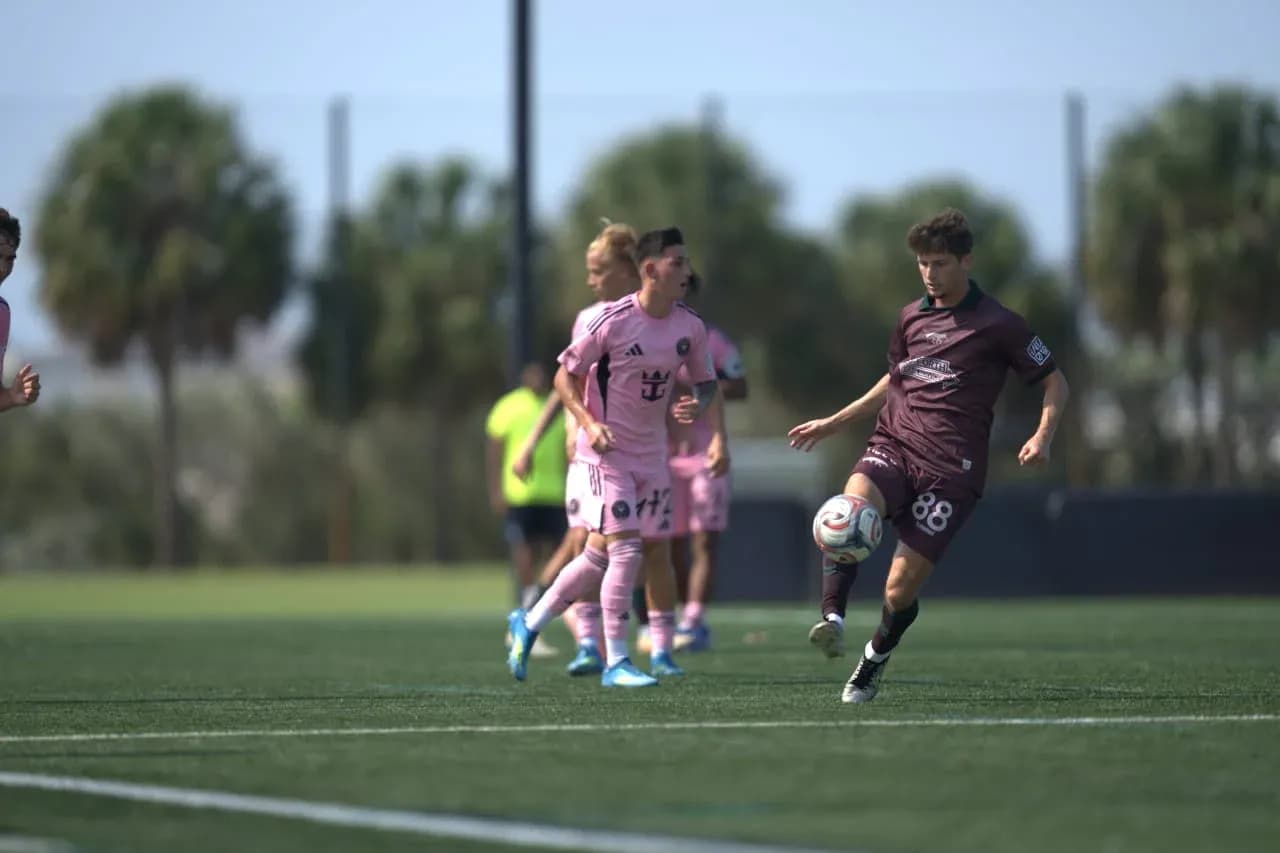
Carolina’s midfield spine – T. Zeegers (7), M. Diakite (16), R. Aguirre (23) and T. Raimbault (20) – had to reconcile contradictory tasks: screen a vulnerable defence while also supplying A. Tattevin (26) and D. Diaz (58). With Carolina averaging only 0.8 goals away and failing to score in 2 matches overall, the burden on this group to progress the ball cleanly is immense. When they lose that balance, the back line is exposed and the forwards become isolated.
In this match, Huntsville’s superior form – WWWLW in the Eastern Conference table and WLLWLWWW overall – translated into a confident midfield press. Carolina, coming in with LLWLL in the conference snapshot and a season-long form of LLLLLLWLL, were always likely to struggle once they fell behind.
IV. Statistical Prognosis – xG and defensive solidity in narrative form
We do not have explicit xG values, but the season numbers allow a reasoned projection of chance quality. Huntsville’s average of 2.3 goals for and 2.1 against overall, paired with Carolina’s 1.2 for and 2.4 against, point toward a game tilted heavily toward the home side in expected terms. On their travels, Carolina’s 0.8 goals for and 2.6 against set up a baseline where Huntsville could reasonably expect to generate multiple high-quality chances while limiting Carolina to scraps.
Huntsville’s home defensive average of 1.0 goal against per game is crucial. It suggests that, in front of their own crowd, they compress space better, manage transitions more intelligently and lean on structured pressing rather than the open exchanges that have hurt them away. The clean sheet here becomes less of a surprise and more of a continuation of that home pattern.
Carolina’s inability to register a single clean sheet overall is symptomatic of systemic issues rather than isolated errors. The lack of a stable defensive platform forces them into high-variance games they are not equipped to win, especially away from home where their attack drops to 0.8 goals per match.
Put together, the underlying numbers and the 3–0 final score align almost perfectly. Huntsville’s offensive volume and home solidity met Carolina’s travel frailties and defensive volatility. The narrative that emerges is not of an upset, but of a model fixture: a playoff-chasing side executing its plan with clarity against a team still learning the league’s demands.
For Huntsville City, this performance reinforces their credentials as a dangerous Eastern Conference playoff contender, particularly at Joe W. Davis. For Carolina Core, it is another data point in a harsh but necessary education: until they stabilise their defensive structure and emotional control across the 90 minutes, every away trip will feel like a climb up a steep, unforgiving hill.