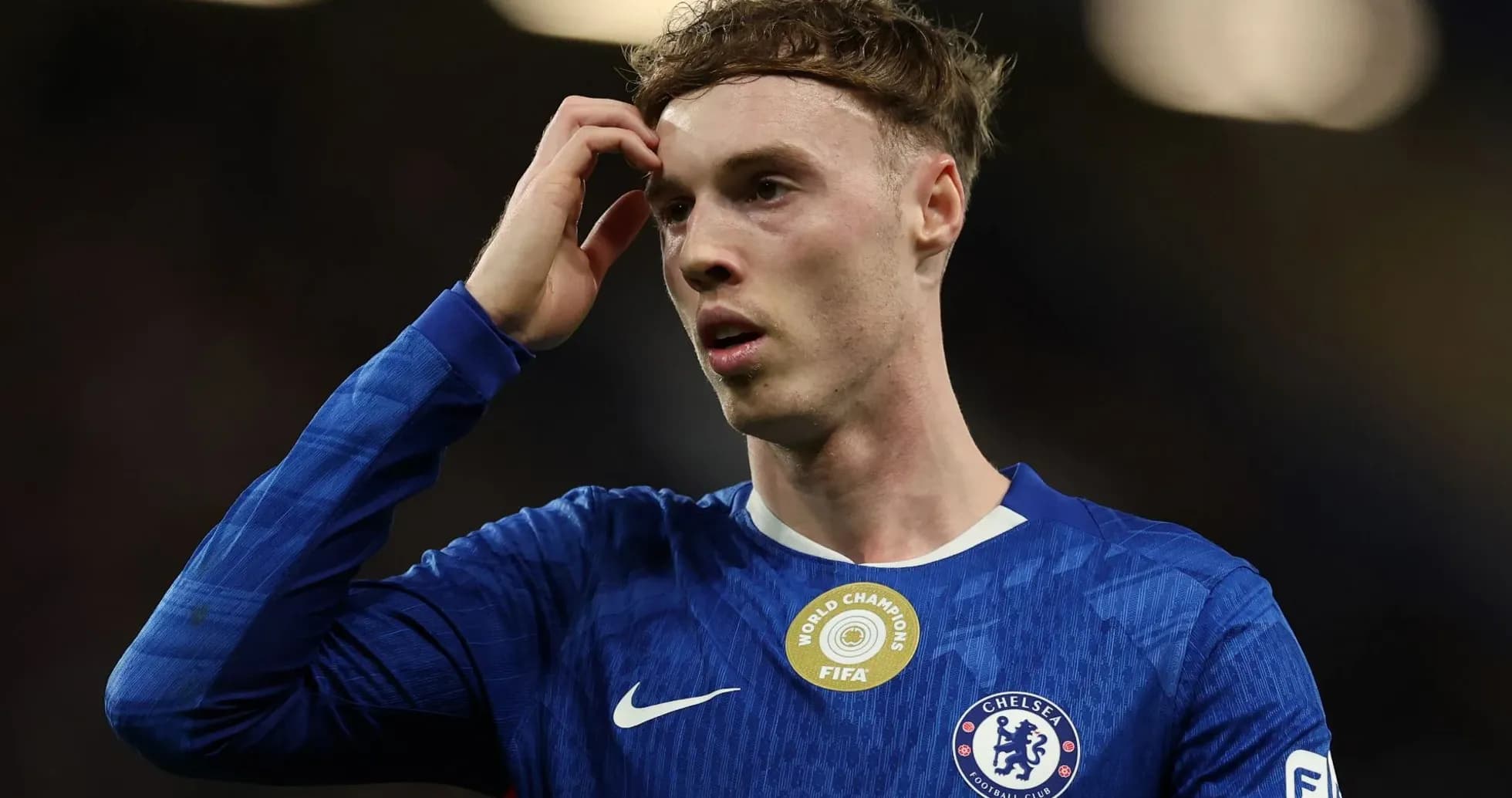
Harry Kane: Bayern Munich's Best Transfer Ever
Uli Hoeness has never been shy with a superlative, so when he walked out of the DFB-Pokal final and called Harry Kane “the best transfer the club has ever made” after a Kane hat-trick sealed a 3-0 win, it sounded like classic Hoeness theatre. A month on, with the confetti swept away and the adrenaline gone, the line hasn’t softened. Inside Bayern, the verdict is the same: he really is that good.
What has stunned Germany – and much of the wider game – is how quietly Kane has bent the narrative to his will. No great reinvention. No social media campaign. Just goals, relentlessness and a presence that has seeped into every corner of the club.
Not long ago, the story around Kane felt very different. Euro 2024 painted him as a nearly man, the great striker without a medal, dragging his reputation through another tournament without a trophy. Add in the scepticism that followed his Golden Boot at Russia 2018 – dismissed in some quarters as padded by group-stage goals – and it was easy to frame his peak years as heroic but ultimately futile effort. A marathon of toil, no finish line.
Now look at the company he keeps. When Time assembled its faces of this World Cup – Lionel Messi, Cristiano Ronaldo, Neymar, Kylian Mbappé, Lamine Yamal, Jude Bellingham – Kane stood among them, finally granted his place at football’s top table. For Hoeness, the gamble Bayern took in breaking the €100m barrier for the first time has already been settled.
“When we bought him for more than €100m, that was new territory for us and a crazy risk,” the president said. “But he’s paid back every single euro. Not just because he scores so many goals, but because he is a role model in the dressing room.”
That last point matters in Munich. Hoeness talks about Kane putting an arm around younger players, about the way he speaks, listens, corrects. The language barrier could have been an excuse – Kane is still working through his German lessons, written into his contract – but the dynamic of the squad has cushioned that. Many of Bayern’s key figures are fluent in English, and Vincent Kompany runs the dressing room largely in that language. Communication has never really been the problem.
The physical side certainly hasn’t been. Hoeness, a World Cup winner from a very different era, has watched defenders in the Bundesliga try to rough Kane out of games. It hasn’t worked. “I think you’d have to cut off his head or his arm to stop him playing,” he said, half-joking, half-admiring. The resilience is real.
Inside the club, staff talk about his impact in the same breath as Manuel Neuer and Thomas Müller in their later years. Those two are Bayern lifers, legends knitted into the fabric of the place. Kane walked in as an outsider and has ended up with a similar gravitational pull.
That wasn’t guaranteed. When his family initially delayed the full move to Munich, the old stereotype of the British player abroad hovered in the background. The Ian Rush line about Juventus being “like living in a foreign country” – misattributed or not – still lingers as a punchline. Kane has cut straight through it.
He and his wife, Kate, have settled in a rural home once owned by Lucas Hernández, tucked near the affluent suburb of Grünwald. Talk to Kane about life off the pitch and the detail that jumps out is how his family have leaned into Bavaria rather than hiding from it. The children – Ivy, Vivienne, Louis and Henry – ski in winter. Kane, contractually barred from risking the slopes, tags along on Alpine trips to Garmisch instead.
Then there was Kirchweidach. A village of 2,000 near the Austrian border, a fan day that could easily have felt like a box-ticking exercise. Instead, Kane threw himself into it: seasoning soup in a traditional wedding ritual meant to symbolise his union with Bavaria, playing skittles with litre beer steins. He called it “a bit crazy” in classic English understatement, but he didn’t stand on the edge of the room. He joined in.
All of this would be background noise if the football didn’t match it. Bayern knew they were signing a world-class striker; they did not expect this level of dominance, this breadth of technical expression. The trophy drought that stalked his career finally ended with the 2025 Bundesliga title. Another league crown followed, plus the DFB-Pokal. With the weight lifted, Kane has somehow sharpened. He looks leaner. Quicker. More ruthless and more complete than at any point in his twenties.
His catalogue of goals in Munich is already extensive, but a couple stand apart. The strike against Atalanta in the Champions League stands as a personal showreel: a drag-back and turn that left two defenders grasping at shadows, followed by the sort of clean, unfussy finish that has become his calling card. The second goal in the DFB-Pokal final, the one that effectively killed the contest on 80 minutes, told an even richer story. A vicious curling effort from outside the box smashed the bar, the ball dropped back into chaos, and Kane, first to react, executed another drag-back and turn to carve out a yard before finishing. Instinct, technique, composure – all in one move.
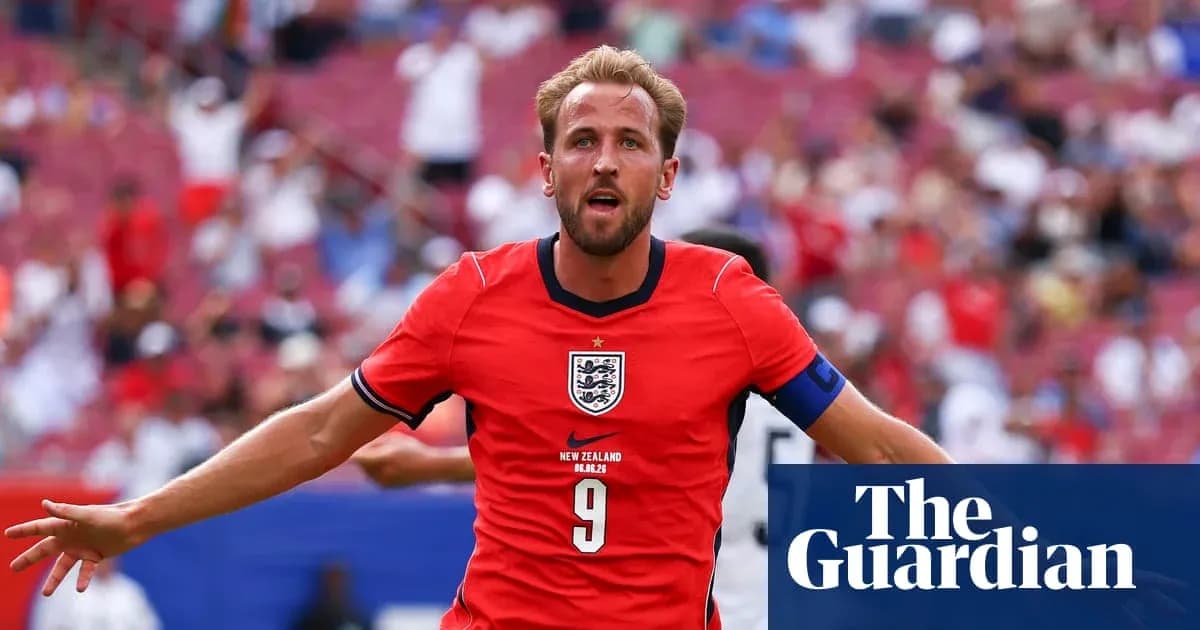
The numbers are staggering. With 61 goals for Bayern, he is the only player in Europe’s major leagues currently operating in the rarefied air once owned by Messi and Ronaldo, with only Erling Haaland close. Ronaldo’s 66-goal season and Messi’s absurd 73-goal campaign felt like records from another sport. Kane, after the friendly against New Zealand in Tampa, sits on 67.
And he is not just living in the penalty area. At Bayern he often drops into a No 6 zone when the team are out of possession, collecting the ball deep, dictating tempo. His passing range, long seen as a bonus trait at Tottenham, has become a core weapon. The assist for Luis Díaz in the Champions League semi-final first leg against Paris Saint-Germain – a precise, cutting delivery – underlined how complete his game has become. It is little surprise Thomas Tuchel intends to transpose much of that Bayern blueprint into his World Cup plans.
For years, the Ballon d’Or conversation passed Kane by. Tottenham’s lack of trophies, the early exits in Europe, the narrative around his career – all of it kept him on the fringes. Now, with regular deep runs in the Champions League and medals finally in the cabinet, his name sits firmly among the contenders. So much, inevitably, hinges on this World Cup. But if you step back, it feels like the culmination of a long, slow climb. Not the meteor rise of a prodigy, but the patient, relentless ascent of a player who refused to accept his supposed ceiling. In football’s fable, he has always been the tortoise, not the hare.
Those who knew him at Spurs as a teenager would recognise that thread. The young Kane was not the golden boy. By elite standards he carried a bit of extra weight, lacked explosive pace and was not the most naturally gifted technician. “You would never have thought that he would be what he is now,” one youth coach recalled. The turning point came around 14, when a growth spurt coincided with technical improvement and a striking ability that suddenly leapt off the training pitch. The other trait that stood out? Absorption. Any instruction – gym work, finishing drills, movement – only needed saying once.
The path from there to Bayern dominance was anything but smooth. His loan at Norwich turned into a cautionary tale. It began with a glaring, high-profile miss on his debut against West Ham, continued with a half-time substitution in a bruising FA Cup defeat to non-league Luton and drifted into the indignity of being dropped to the under-21s. There, he wasn’t even allowed to take penalties. The message was blunt: he wasn’t trusted from the spot.
At Leicester, during another loan, he watched from the bench alongside Jamie Vardy for both legs of the 2013 Championship playoff semi-final against Watford. The stage he craved was in front of him; others were chosen to play on it.
Even back at Spurs, the doubts lingered. Mauricio Pochettino, newly installed and uncompromising, was not immediately convinced after an underwhelming pre-season in 2014. Kane still remembers the jolt of the body fat test. “We had our body fat test done and I was the highest in the team, something like 18%,” he said. The meeting that followed was blunt. Pochettino told him the numbers were not good enough, that he was not pushing himself as hard as he could. Then came the twist. “He told me: ‘You can be the best striker in the world.’”
At the time, that sounded like motivational exaggeration from a manager trying to light a fire under a struggling young forward. Just as Hoeness’s “best transfer ever” line sounded like a president playing to the gallery.
The irony is that both men may have simply seen the future a little earlier than everyone else.