Graham Potter's Revival: Sweden's World Cup Journey Begins
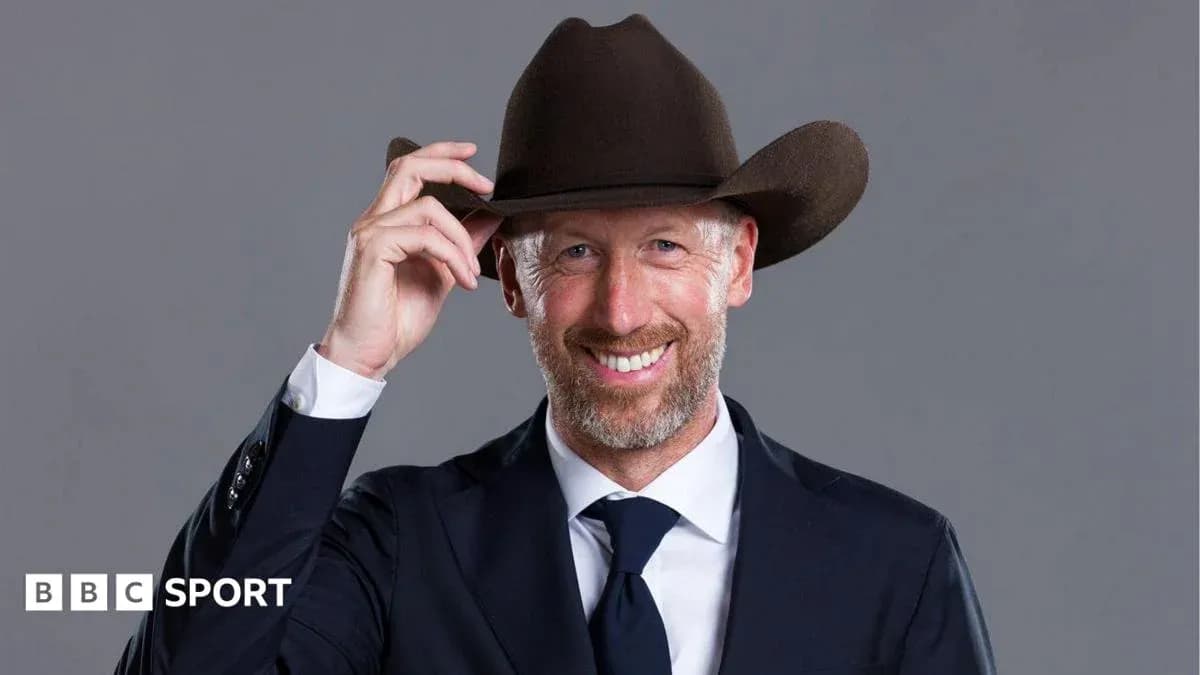
Graham Potter walked out to Sweden training in Texas last week wearing a Stetson. It looked like a joke, a bit of World Cup dress-up from a coach trying to loosen his players in the heat.
It also looked like a man some thought was on his last ride.
Two brutal sackings in 15 months at Chelsea and West Ham had left Potter’s reputation dented, his methods questioned, his future at the elite level uncertain. The jibes about “last-chance saloon” practically wrote themselves.
Then came Estadio Monterrey.
Here, under the Mexican night, Sweden tore Tunisia apart. A 5-1 win. A statement. A team that had stumbled and stuttered through qualifying suddenly played with clarity, bite and purpose.
The cowboy hat might have been a gag. The football was deadly serious.
From failure in England to lifeline with Sweden
Potter’s path to this World Cup has been anything but smooth. West Ham sacked him in late September after just six wins in 23 Premier League games. Before that, Chelsea had swallowed him whole, the job proving too big and too volatile even for a coach who had built his reputation on calm, methodical progress at Brighton.
By the time Sweden called in October, his stock in England had slumped. And the national team he inherited were already in a hole.
Under Jon Dahl Tomasson, Sweden’s qualifying campaign had collapsed. Automatic World Cup qualification was gone. They finished bottom of a group containing Switzerland, Kosovo and Slovenia, without a single win in six games. The damage was done long before Potter arrived.
Their route to Texas came not via dominance, but via the back door: a place in the play-offs secured by their Uefa Nations League ranking of 34. It was a lifeline for Sweden. It doubled as a lifeline for Potter.
He took it.
Sweden beat Ukraine. Then Poland. A team that had forgotten how to win suddenly remembered. The World Cup, which had looked distant, opened up in front of them.
And now, after dismantling Tunisia, they have launched their tournament with the kind of result that changes the mood around a camp overnight.
“You never know, that's the truth,” Potter said after the 5-1 win. “You never know how things are going to go. We were optimistic because we felt confident in the work.
“But until the game is played you don't know for sure. That's the beauty of sport. We are delighted with how we performed tonight and it's a great start for us.”
A new edge – and a familiar country
The numbers underline how far Sweden have come in a short time. They scored more goals in 90 minutes against Tunisia than in the entire group stage of qualifying, where they managed only four.
The transformation is not just tactical. It is personal.
In England, the Solihull-born coach grew increasingly prickly with the media as the pressure built at Chelsea and West Ham. He looked worn down, trapped in the churn of results and reaction.
Here, with Sweden, he looks like a man who has gone home.
This is the country where he really became a manager. At Ostersunds FK, he climbed from the fourth tier to the Allsvenskan, won the domestic cup and took a tiny club into European competition. Those seven years reshaped his career and, by his own admission, his identity.
“I feel very Swedish when I'm working,” he told BBC Sport before the tournament. “I even look a bit Swedish. Two of my children were born in Sweden. I had seven unforgettable years at Ostersunds, with memories that will stay with me for life.
“I came from the fourth tier of Swedish football, which is quite low, and worked my way up through the system to the Allsvenskan.
“You almost become Swedish in a coaching sense because of the experiences you have. I think it has definitely helped.
“Now I'm working for the Swedish FA as head coach of the national team, so I feel very Swedish.”
His Instagram shows the same story: hiking through forests, reading Nordic literature, immersing himself in local culture. But the work behind the scenes has been just as intense. This Sweden side did not turn up in Mexico undercooked.
They arrived ready.
Isak, Gyokeres and a front line with teeth
Nothing helps a coach’s rebirth quite like talent in form. For Potter, the return to full fitness of Alexander Isak is priceless.
The Liverpool striker, valued at £125m, gives Sweden a cutting edge they simply did not have during qualifying. Against Tunisia, his understanding with Arsenal forward Viktor Gyokeres lit up the game.
The pair linked cleverly, combined sharply and, crucially, set each other up to score. Two centre-forwards assisting one another in a World Cup opener is the sort of detail that excites a manager as much as the goals themselves.
This is an attack with serious weight behind it and a price tag to match. After missing out on Qatar 2022, Sweden are back on the biggest stage with a front line that can trouble any defence if it clicks.
Potter’s challenge now is to build the rest of the team around that threat. Experience at this level is thin. Only Victor Lindelof has actually played in a World Cup match before; goalkeeper Kristoffer Nordfelt was in the squad in Russia in 2018 but did not get on the pitch.
That lack of tournament know-how can expose a squad. It can also bind one together if the coach gets the tone right. So far, the signs are that Potter’s voice is landing.
Given the expanded format, Sweden are already well placed to reach the last 32. The thrashing of Tunisia, ranked 56th in the world, sets them up. But it does not define them.
The real test arrives on Saturday.
Netherlands next – and echoes of history
Netherlands await in Group F, one of the favourites for the tournament and a far sterner examination than Tunisia. This is where we find out what Sweden’s opening-night swagger is really worth.
“We just focus on what we can do, we focus on our performances,” Potter said in his post-match press conference. “It doesn't matter what people think from the outside or opinions.
“That's the beauty of the World Cup everyone has predictions and forecasts but we have to focus on our job and how we play as a team.
“We will meet another top team at the weekend who are one of the favourites for the competition.”
History offers its own twist.
Sweden’s best World Cup finishes are two third places. The first came in 1958 with another Englishman, George Raynor, in charge. The second arrived in 1994, the last time the tournament was staged in the USA.
The omens will not win a tackle or finish a chance. But they add a layer of intrigue to Potter’s story.
An English coach, shaped in Sweden, wearing a cowboy hat in Texas and leading a national team that many had written off, now has momentum on his side.
For a manager once accused of being out of his depth at the very top, the question is no longer whether he belongs here.
It is how far this Sweden team will let him ride.