Curaçao Faces Germany: Joshua Brenet's Journey to Redemption
On Sunday evening in Germany, a tiny Caribbean island will stare down a football giant. And on Curaçao’s right flank, a familiar face to Julian Nagelsmann will be charging into the contest like a man who has already burned through several careers.
This World Cup story is rooted far from the tropics. Curaçao, still part of the Kingdom of the Netherlands but largely self-governing, has seen generations of its people move to Dutch cities and suburbs. Their children and grandchildren grew up in Rotterdam and Eindhoven, not Willemstad, yet they now carry the island’s colours on the biggest stage. Of the 26 players in Curaçao’s squad, only one was actually born on the island. The best-known name is Tahith Chong, once a highly touted prospect at Manchester United and now at Sheffield United.
Chong is not alone in having followed a winding route through Europe. Six members of this squad have German chapters on their CVs. Gervane Kastaneer had a spell at 1. FC Kaiserslautern, Riechedly Bazoer featured for VfL Wolfsburg, and Roshon van Eijma turned out for Preußen Münster. Jürgen Locadia and Joshua Brenet both passed through TSG Hoffenheim. Each of them carries a piece of the German game into this tournament.
None, though, arrives with a backstory quite as turbulent as Brenet’s.
From Nagelsmann’s project to problem case
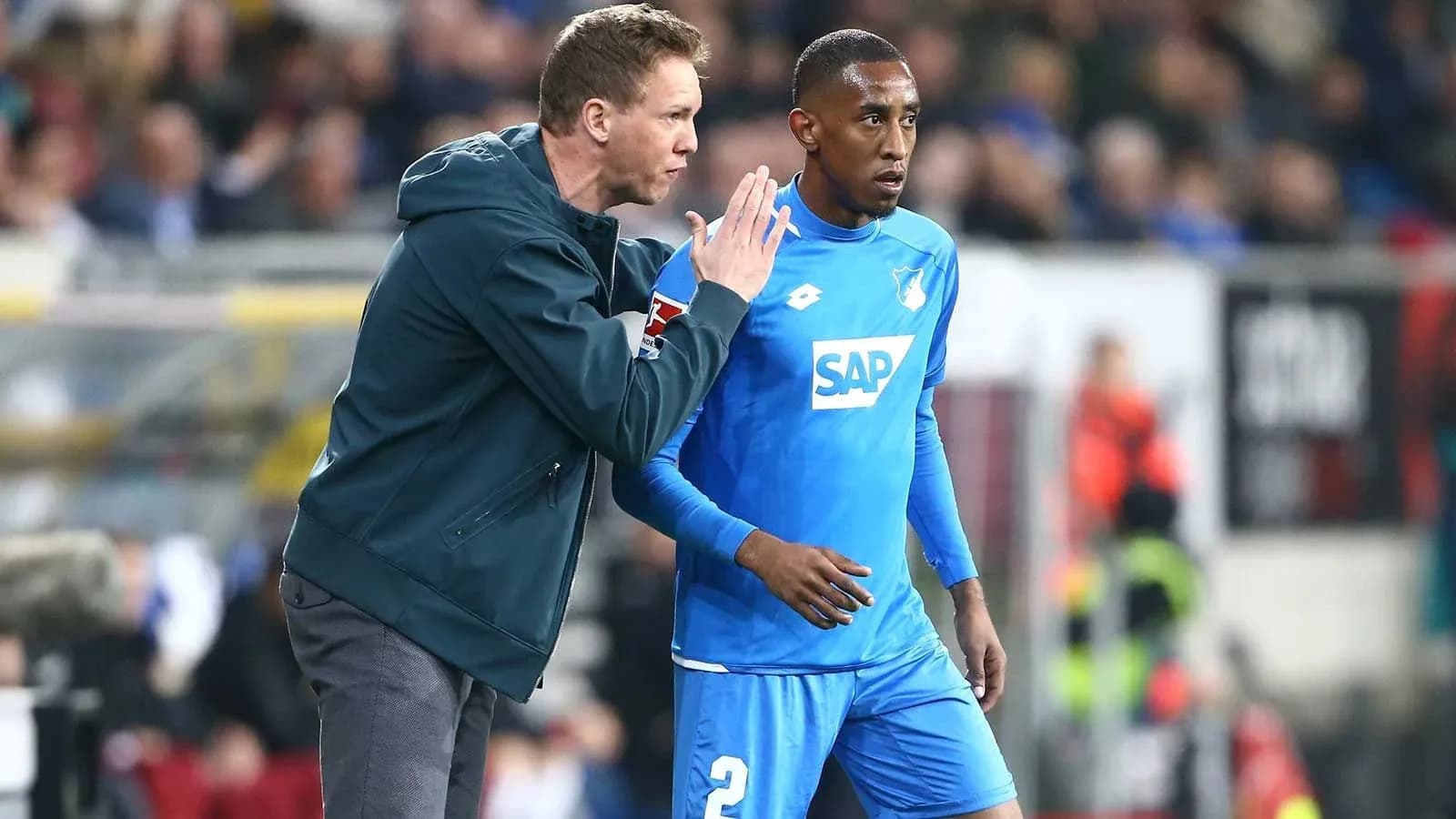
When Hoffenheim paid €3.5 million to prise Brenet from PSV Eindhoven in 2018, it looked like a smart, targeted move. He arrived as a three-time Eredivisie champion, a modern full-back with pace and pedigree, and already capped twice by the Netherlands. Nagelsmann had pushed for him. This was supposed to be a step up.
It unravelled almost immediately.
Brenet spent the opening Bundesliga matches on the bench, watching rather than influencing. Then came Hoffenheim’s first-ever Champions League match, against Shakhtar Donetsk. On the eve of that historic night, he skipped a video session. Nagelsmann’s response was swift: Brenet was dropped from the squad.
He did work his way back into the coach’s plans, but only in flashes. Cameos, not a role. The following season, with Alfred Schreuder in charge, even those minutes dried up. Schreuder, now Nagelsmann’s assistant with Germany, simply did not use him. Under Sebastian Hoeneß, the decline became brutal. Brenet was sent to the reserves in the Regionalliga Südwest, German football’s fourth tier.
The demotion was not just about form. Repeated disciplinary issues, including chronic lateness, stained his reputation. Hoffenheim tried to move him on; no one wanted to pay. Only in 2022, when his contract ran down, did he finally leave for free, joining Twente Enschede and, briefly, rebuilding his footballing value.
Courtrooms, community service, and a contract torn up
On the pitch at Twente, Brenet reminded everyone why clubs once fought for his signature. He attacked with conviction, defended with bite, and looked again like the full-back who had broken through at PSV.
Off the pitch, he imploded.
In January 2023, Dutch authorities caught him driving without a licence twice in two weeks. He had already lost that licence in 2020 after a drink-driving offence. The pattern was clear, and the court treated it that way. “He clearly has no regard for authority. It seems to me as though he is continuing to play football after receiving a red card,” the presiding judge said, before handing down a one-month prison sentence in 2024.
This was not his first serious brush with the law. In 2021, Brenet had received a suspended sentence, a fine and community service for domestic violence. The new conviction pushed his career to the brink. The prison term for driving without a licence was later converted to community service on appeal, but the damage at club level was done. Twente terminated his contract.
From there, his path became nomadic. He joined Al-Rayyan in Qatar and played only six times in the 2024/25 season. By autumn he was in Scotland with Livingston FC. A few months later, he moved again, this time to Kayserispor in Turkey for the second half of the campaign. A once-stable career had turned into a restless search for minutes and a fresh start.
New flag, old fire
Amid that chaos, Brenet made a decision that reshaped his international future. After years in the Dutch system, with appearances for youth teams and even a senior debut in the 2016 World Cup qualifiers, he switched allegiance. FIFA granted him permission to represent Curaçao, the country of his parents.
The impact has been immediate. Since his debut in 2024, Brenet has scored six goals in 17 games for Curaçao – a remarkable return for a right-back. In their final warm-up match against Aruba, he started on the right of defence and found the net again, a reminder of the attacking thrust that once excited scouts across Europe.
Now 32, he steps into a World Cup opener that drips with personal subtext. On the opposite bench stand Nagelsmann and Schreuder, the coaches who once tried to mould him, then moved on without him. For Germany, this is another group-stage assignment. For Brenet, it is something else entirely.
Curaçao will arrive as underdogs, a nation of fewer than 200,000 people facing a four-time world champion. Yet their team is built on players hardened in European leagues, men who have known relegation battles, promotion pushes, and in Brenet’s case, the cold reality of courtrooms and reserve-team pitches.
On Sunday at 7 pm, when Curaçao walk out to face Germany, the island’s diaspora will see its story play out on a global stage. For Joshua Brenet, it is more than a reunion with old bosses. It is a chance to show that after the red cards of his past, he still has a game worth playing.