Crown Legacy vs Orlando City II: A Clash of Football Identities
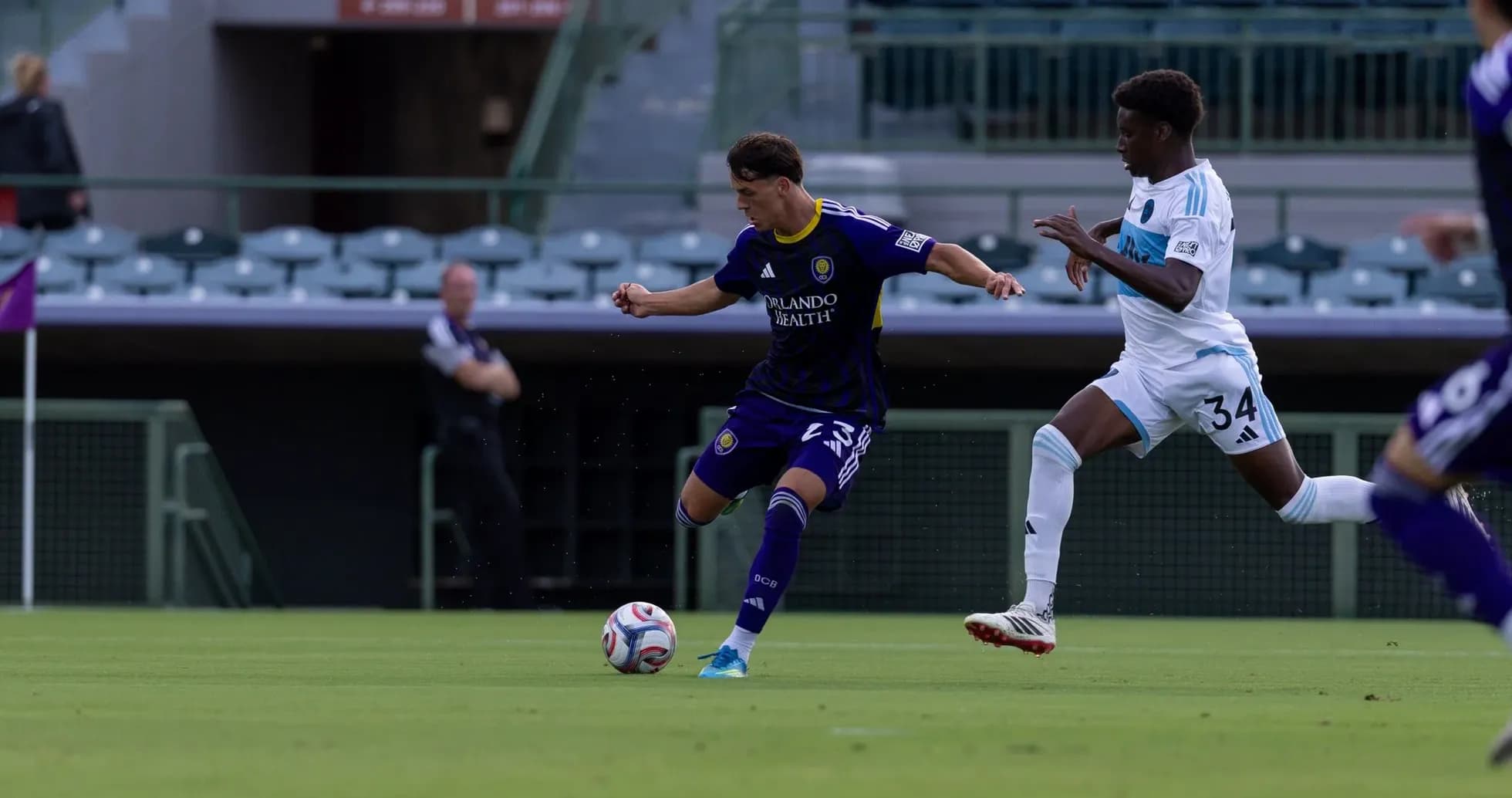
Osceola County Stadium under the lights, group-stage tension in MLS Next Pro, and a contest that refused to die even after 120 minutes. Following this result, Orlando City II and Crown Legacy are separated only by a 5-4 edge to the visitors in the penalty shootout after a 2-2 draw in normal time, but the deeper story is about contrasting football identities and how they collided across two frantic hours.
I. The Big Picture – Clash of Identities
Crown Legacy arrived as the benchmark side in the Eastern Conference. Heading into this game, they sat 1st in both the Central Division and the Eastern Conference with 23 points from 9 matches, powered by a ruthless attack: 27 goals in total league play and a towering total goal difference of +17 (27 goals for and 10 against). On their travels, they had won 3 of 4, scoring 11 and conceding 8, an away profile of 3.3 goals scored and 2.3 conceded on average.
Orlando City II, by contrast, were the ambitious chasers. Heading into this game, they were 3rd in the Central Division and 6th in the Eastern Conference on 13 points from 8 matches. Their season has been defined by volatility: 17 goals scored and 19 conceded overall in the standings snapshot, a total goal difference of -2. The extended statistics sharpen that picture: in total this campaign they had scored 20 and conceded 20, averaging 2.5 goals for and 2.5 against per match, with no clean sheets and no games where they failed to score. Every Orlando fixture has been a shootout waiting to happen.
The 2-2 draw in regulation followed by defeat on penalties fits that DNA perfectly: Orlando capable of going toe-to-toe with the league’s most explosive attack, but again unable to lock the back door when it mattered most.
II. Tactical Voids and Discipline – Edges at the Margins
Squad-wise, both coaches had near-full complements; there was no formal list of absentees. For Orlando, Manuel Goldberg trusted a youthful, fluid XI built more on roles than rigid positions. T. Himes anchored the side, with P. Amoo-Mensah, L. Okonski and J. Yearwood among those tasked with holding the structure together. Ahead of them, the creative and running power of B. Rhein, D. Judelson, I. Gomez and G. Caraballo supported the attacking trio of Pedro Leao, M. Belgodere and H. Sarajian.
Crown Legacy’s lineup mirrored their season-long aggression. J. A. Wickham started in goal, shielded by J. Smith, J. Neeley, A. Johnson and A. Kamdem. In midfield and attack, the names tell a story of dynamism: A. Subotic and B. Coulibaly as central pillars, with A. Mendoza, E. Uchegbu, H. Mbongue and N. Berchimas offering constant movement and vertical threat.
Discipline has quietly shaped both teams’ tactical choices this season. Orlando’s yellow-card profile is front-loaded into the middle phases of games: 27.78% of their cautions arrive between 31-45 minutes, with another 22.22% between 16-30 and 22.22% between 46-60. That pattern suggests a side that often has to foul to regain control once the tempo rises, especially around half-time. Crown Legacy, meanwhile, show a different rhythm: their biggest yellow surge comes between 46-60 minutes at 27.27%, with a late spike of 22.73% from 76-90. Add to that a single red card shown between 91-105 minutes (100.00% of their reds in that extra-time window) and you get a portrait of a team that pushes the limits as matches stretch and fatigue sets in.
Over 120 minutes in Orlando, those trends would have underpinned the emotional tone: Orlando’s need to survive the chaotic middle third, Crown Legacy’s willingness to walk the disciplinary tightrope late on to preserve a result or chase a winner.
III. Key Matchups – Hunter vs Shield, Engine Room vs Enforcer
The “Hunter vs Shield” dynamic in this tie is almost structural rather than individual. Crown Legacy’s attack, in total this campaign, has been devastating: 29 goals across 9 league fixtures, with 16 at home and 13 on their travels. Their biggest wins – 7-2 at home and 1-4 away – show a team that can both dominate and counterpunch. They arrived in Orlando on the back of a season-long run that included a 7-match winning streak, underlining their ability to impose their attacking rhythm on almost anyone.
Orlando’s “shield” is less about defensive solidity and more about collective resistance. In total this campaign they concede 2.5 goals per match and have yet to keep a clean sheet. Their biggest defeat at home (1-3) and away (3-1) shows that once their line is breached, they can unravel. That made the duel between Orlando’s back line—Himes marshalling, with Amoo-Mensah, Okonski and Yearwood around him—and Crown Legacy’s front quartet of Uchegbu, Mbongue, Mendoza and Berchimas the defining battle.
In midfield, the “Engine Room” clash revolved around whether Orlando’s ball-players could keep the game on their terms. B. Rhein and D. Judelson are the rhythm-setters for Goldberg’s side, supported by the dribbling and vertical carries of I. Gomez and G. Caraballo. Across from them, Crown Legacy’s central axis of A. Subotic and B. Coulibaly is built for control and transition. Their season statistics show a team that scores freely but also concedes 2.3 goals on average away from home; that vulnerability in transition was Orlando’s invitation to attack.
The benches offered different tools. Orlando could inject energy and unpredictability through the likes of C. Trombino, C. Archange and I. Haruna, while L. Maxim and B. Kendall provided alternative structures at the back or in goal. Crown Legacy’s depth—M. Ayovi, A. Ouedraogo, E. Pena, M. Smalls and N. Richmond—allowed them to maintain intensity and attacking threat deep into extra time, a key factor in a match that went to 120 minutes and penalties.
IV. Statistical Prognosis – Why the Shootout Felt Inevitable
On the numbers, this fixture always leaned toward chaos. Orlando’s season averages of 2.5 goals scored and 2.5 conceded in total play, combined with Crown Legacy’s 3.2 goals scored and 1.2 conceded overall, pointed toward a multi-goal contest where neither side was likely to keep a clean sheet. Orlando had yet to fail to score; Crown Legacy had not been shut out either. The 2-2 scoreline in normal time is almost a mathematical expression of those profiles.
Defensively, Crown Legacy’s split personality—0.4 goals conceded at home on average versus 2.3 away—suggested that once removed from their own environment, they could be dragged into the kind of open exchange Orlando thrives on. That is exactly what unfolded: Orlando’s relentless willingness to attack, powered by their front unit and supported by runners from midfield, forced the league leaders into an end-to-end battle.
From the spot, the margins finally broke in favor of the visitors. Crown Legacy’s perfect penalty record in total this campaign—3 taken, 3 scored—hinted at a group comfortable under 12-yard pressure. Orlando, with 1 penalty in total and 1 scored, had no misses to haunt them, but also far less volume of experience. The 5-4 shootout win for Crown Legacy feels like the logical extension of that composure.
Following this result, Crown Legacy leave Orlando having survived a full-blooded test of their title credentials, their attacking firepower and penalty nerve intact. Orlando City II, meanwhile, confirm their status as one of the league’s great entertainers: flawed at the back, fearless going forward, and dangerous enough that no heavyweight can feel safe at Osceola County Stadium.