
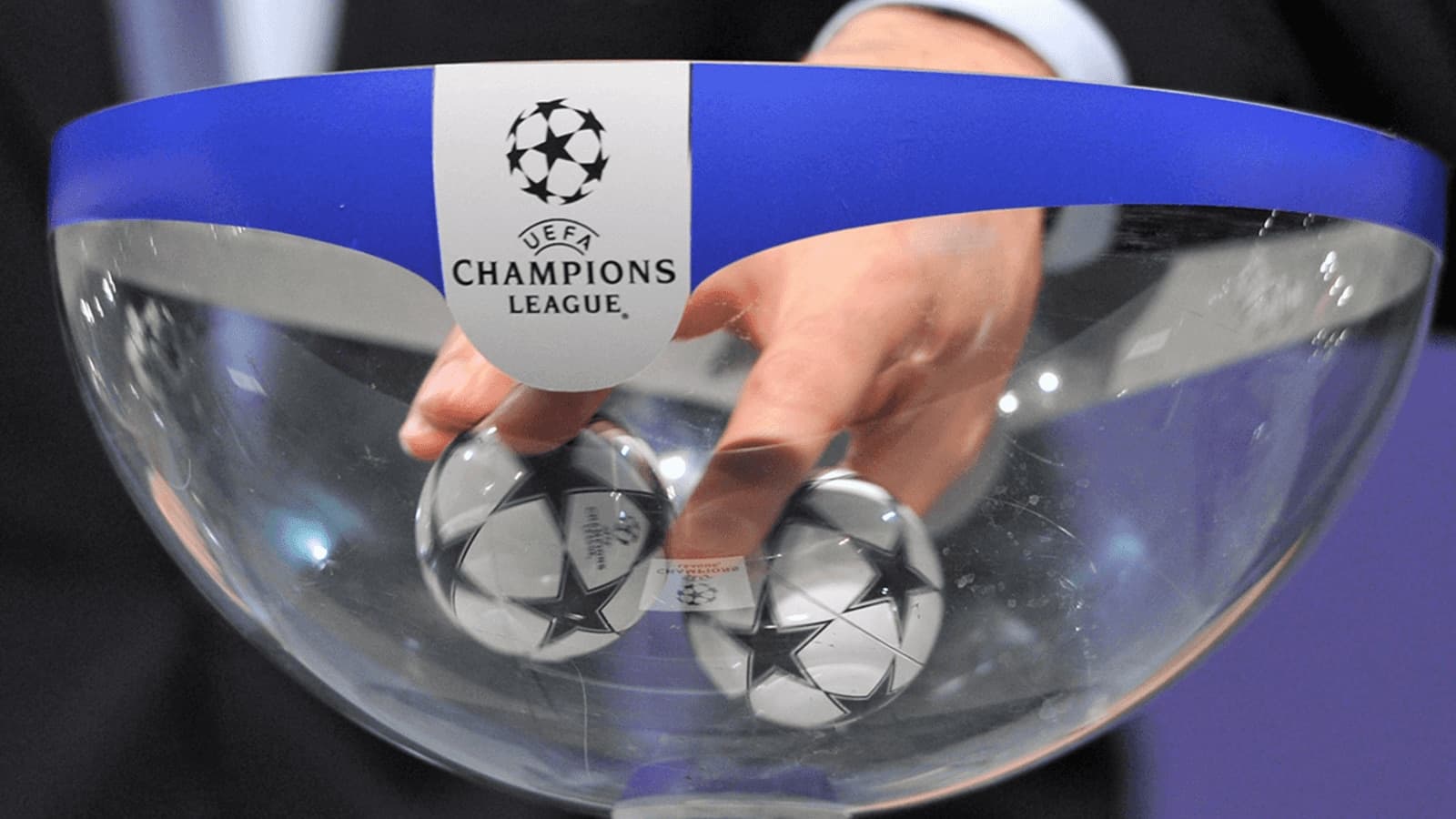
Champions League 2026/27: A New Era Awaits
The penalty heartbreak in Budapest is still fresh. Paris Saint-Germain held their nerve from the spot, the trophy slipped away, and a long night ended with medals that felt far too light. Yet as the dust settles on that second Champions League final in as many years, the horizon is already shifting towards 2026/27.
The Premier League title – the first since 2004 – changes everything. It confirms domestic supremacy and guarantees another crack at Europe’s elite. For the fourth season running, the club returns to the Champions League, this time not as hopeful contenders but as one of the standard-bearers of the new era.
Across the continent, the field is almost set. Twenty-nine of the 36 places are already locked in. The shape of next season’s competition is emerging, piece by piece, ahead of the league phase kicking off on September 8.
A New Champions League, Now Here to Stay
The Champions League that awaits is no longer the old, familiar group-stage beast. The 2025/26 season marked only the second campaign under UEFA’s revamped “league phase” format, which replaced the traditional eight groups of four with a single, expanded field of 36 clubs.
That system remains in place for 2026/27. Each side will play eight games, all in the league phase, against eight different opponents – four at home, four away. No return fixtures. No hiding place.
Finish in the top eight of that 36-team table and the reward is straightforward: direct passage to the knockout stage. Slip between ninth and 24th and the route becomes more treacherous, with a two-legged play-off required to reach the last 16. Drop any lower and the European adventure ends early.
Two of the extra spots in this enlarged league go each year to the associations whose clubs performed best collectively the previous season. In 2024/25, that honour fell to England and Spain, handing an additional berth to both the Premier League and La Liga.
This is the landscape into which the club steps as reigning English champions. Last season’s league phase set the tone: eight games, eight wins, top of the pile – the first team to run the table since the format was introduced. It was a statement to the rest of Europe. The challenge now is to repeat it under the weight of expectation.
Who’s In: Europe’s Heavyweights Assemble
England will send five sides into next season’s Champions League. The champions are joined by Liverpool, Manchester City, Manchester United and Aston Villa, all of whom secured their places through top-five Premier League finishes.
Spain matches that strength in numbers. Real Madrid, Barcelona, Atletico Madrid, Villarreal and Real Betis all come through La Liga, giving the competition a familiar Iberian edge.
Italy and Germany bring four clubs each. From Serie A, Napoli, Inter Milan, AS Roma and Como step onto the European stage. From the Bundesliga, it’s Bayern Munich, Borussia Dortmund, RB Leipzig and Stuttgart.
France sends three: defending European champions Paris Saint-Germain, plus Lens and Lille. The Netherlands adds two more in Eredivisie winners PSV and runners-up Feyenoord.
Portugal’s flag is carried by Porto and Sporting Lisbon. Galatasaray arrive from Turkiye, Slavia Prague from Czechia, Shakhtar from Ukraine, and Club Brugge from Belgium – all champions at home, all qualified weeks or months ago.
Seven more places are reserved for clubs emerging from the pre-season qualifying rounds. The draws for the first and second qualifying rounds were held on June 16 and 17, setting in motion the long summer slog that will decide the final entrants.
Five of those seven spots belong to the “champions path” – domestic title-winners from 42 nations battling for a seat at the top table. The remaining two go to clubs who finished second, third or fourth in their leagues.
Those qualifiers will wrap up on August 26. Twenty-four hours later, on August 27, the draw in Europe will sort the 36 teams into their league phase fixtures. By then, the full cast will finally be known.
The Draw: Giants Everywhere, But Some Off-Limits
The rules for the league phase draw are intricate, but one headline stands out: Premier League teams cannot face each other at this stage. That immediately removes Liverpool, Manchester City, Manchester United and Aston Villa as potential opponents.
UEFA’s club coefficient rankings determine the four pots. The champions sit in pot 1, alongside Paris Saint-Germain, Bayern Munich, Real Madrid, Liverpool, Inter Milan, Manchester City, Barcelona and Atletico Madrid. It is a who’s who of European royalty, and a measure of how far the club has climbed.
Pot 2 is loaded with danger of its own: Borussia Dortmund, AS Roma, Sporting CP, Porto, Club Brugge, Real Betis, PSV Eindhoven, Aston Villa and Manchester United. From there, any draw will bring pedigree and problems.
Pot 3 offers Feyenoord, Lille, Napoli, RB Leipzig, Villarreal, Shakhtar Donetsk and Galatasaray. Pot 4, as it stands, includes Como and Lens, while Slavia Prague, Stuttgart and the seven yet-to-be-determined qualifiers will be assigned either to pot 3 or pot 4 once their coefficients and the final line-up are confirmed.
The structure is simple enough: two opponents from each pot, one home, one away. Eight different teams, eight different styles, eight different atmospheres. Another key limit remains – no more than two clubs from the same country can be drawn against the champions in the league phase.
The play-off round of qualifying is unfolding now, with second legs being played today. Once those ties are settled, the final pieces drop into place. By the evening of August 26, every pot will be locked, every potential storyline ready.
Dates That Will Shape a Season
The next big moment comes on Thursday, August 27, 2026. That is when the draw will reveal the eight opponents and sketch out the path through the league phase.
From there, the calendar tightens. The league phase matchdays are scheduled for:
- September 8–10
- October 13–14
- October 20–21
- November 3–4
- November 24–25
- December 8–9
- January 19–20
- January 27
Once those eight games are done, the table will decide who breathes easy and who fights on. The draw for the knockout play-off round arrives on January 29, 2027, with the two legs set for February 16–17 and February 23–24.
Then comes the business end. The draw for the round of 16, quarter-finals, semi-finals and final is scheduled for February 26, 2026 – a quirk of the calendar that locks in the entire spring roadmap in one hit.
The round of 16 will be played on March 9–10 and March 16–17. The quarter-finals follow on April 6–7 and April 13–14. The semi-finals are pencilled in for April 27–28 and May 4–5.
And then, one last date: Saturday, June 5, 2027. The final, at the Wanda Metropolitano in Madrid.
Budapest brought heartbreak. Madrid offers a new target. With a league title reclaimed and a place among Europe’s top seeds secured, the question is no longer whether this team belongs at that stage – it’s whether they can take the final step when the spotlight burns brightest.