Bay FC and Utah Royals W Play to Tactical Stalemate in NWSL Match
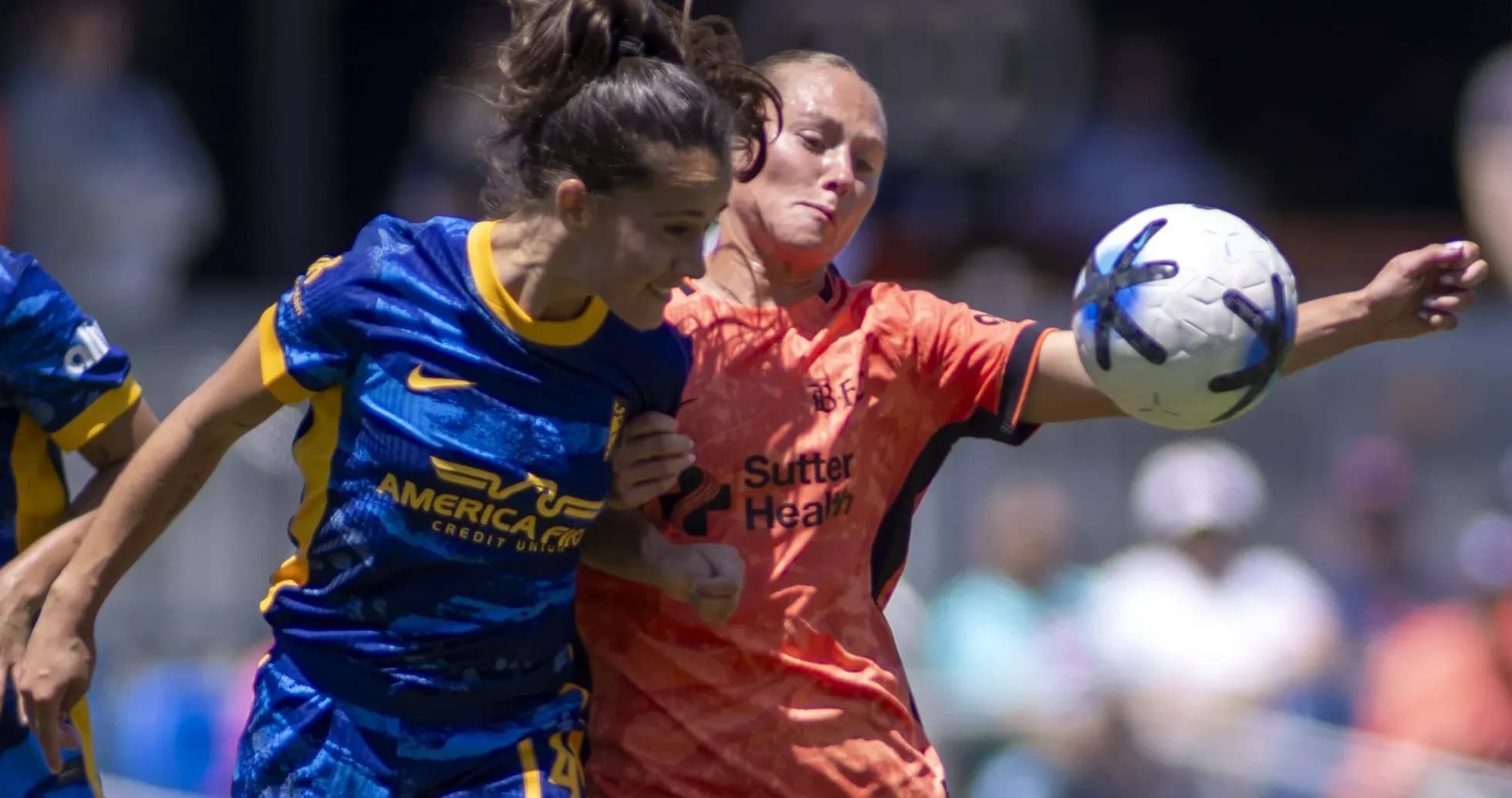
Bay FC and Utah Royals W played out a tactical stalemate at PayPal Park, a 0-0 that was more about structure and control than chaos or volume of chances. With Bay FC edging possession 52% to 48% and both sides registering eight total shots, the match settled into a tight, positional duel. Neither coach revealed a clear formation in the data, but the roles and substitutions made the patterns evident: Emma Coates leaned on a ball-progressing back line and mobile midfield, while Jimmy Coenraets built a compact, transition-ready unit that created the better looks inside the box.
Executive Summary
Bay FC’s approach was based on measured circulation and territorial control, reflected in 338 passes, 248 accurate (73%), and a slight edge in ball possession. Utah Royals W, with 302 passes, 208 accurate (69%), were more direct and penalty-area focused, producing seven of their eight shots from inside the box. Goalkeeper workloads were modest — two saves for Jordan Silkowitz, one for Mandy McGlynn — underscoring how effectively both defensive blocks protected the central corridor. The 0-0 in this NWSL Women Group Stage fixture ultimately felt like a fair outcome between two well-drilled, defensively disciplined sides.
Scoring Sequence & Disciplinary Log
There were no goals in this match, and the halftime score of 0-0 held through to full time.
Disciplinary incidents followed a clear escalation pattern, with Bay FC picking up three yellows to Utah Royals W’s one:
- 55' Claire Hutton (Bay FC) — Foul
- 65' Aldana Cometti (Bay FC) — Foul
- 70' Tatumn Milazzo (Utah Royals W) — Foul
- 81' Joelle Anderson (Bay FC) — Argument
These four cards shaped the match’s emotional tone without tipping it into chaos. Both teams committed 11 Fouls each, but Bay’s higher card count reflected a slightly more aggressive edge in duels and their need to halt Utah’s transitions.
Substitutions, all in the second half, were central to the tactical narrative:
- 46' Tatumn Milazzo (IN) came on for Janni Thomsen (OUT) — Utah Royals W
- 58' Caroline Conti (IN) came on for Taylor Huff (OUT) — Bay FC
- 61' Paige Monaghan (IN) came on for Kiana Palacios (OUT) — Utah Royals W
- 73' Onyeka Gamero (IN) came on for Dorian Bailey (OUT) — Bay FC
- 75' Alexa Spaanstra (IN) came on for Cloé Lacasse (OUT) — Utah Royals W
- 75' Aria Nagai (IN) came on for Narumi Miura (OUT) — Utah Royals W
- 88' Brecken Mozingo (IN) came on for Cecelia Kizer (OUT) — Utah Royals W
- 90' Madeline Moreau (IN) came on for Karlie Lema (OUT) — Bay FC
No VAR events or goal cancellations were recorded.
Tactical Breakdown & Personnel
Bay FC’s structure under Emma Coates was possession-oriented but risk-averse. With no explicit formation provided, the personnel suggest a back four of Sydney Collins, Aldana Cometti, Joelle Anderson, and Anouk Denton in front of Jordan Silkowitz. This unit limited Utah to just two Shots on Goal and only one effort from outside the box, a sign of effective compactness in the defensive third. Silkowitz’s two saves, combined with Utah’s seven shots inside the box, highlight that when Utah did penetrate, they reached dangerous zones — but Bay’s goalkeeper and central defenders managed the key moments.
In midfield, the trio of Hanna Bebar, Claire Hutton, and Taylor Huff, supported by Dorian Bailey and the advanced positioning of Racheal Kundananji, aimed to control tempo. Bay’s 338 passes, 248 accurate (73%), reflect a willingness to build through short and medium-range combinations rather than going direct. However, the shot profile reveals a lack of penetration: only two Shots inside the box and six from outside. The single Shot on Goal from eight total attempts points to sterile possession — good circulation, limited incision.
The substitutions reinforced this reading. At 58', Caroline Conti (IN) for Taylor Huff (OUT) signaled a desire for more verticality and attacking thrust. Later, at 73', Onyeka Gamero (IN) for Dorian Bailey (OUT) added pace and 1v1 potential on the flank, attempting to stretch Utah’s block. The late change at 90', with Madeline Moreau (IN) for Karlie Lema (OUT), was more about fresh legs and defensive stability than reshaping the attack.
Utah Royals W, under Jimmy Coenraets, were more direct and penalty-area focused. Their eight Total Shots mirrored Bay’s volume, but seven inside the box underline a clearer attacking route: structured buildup through the midfield line of Ana Tejada, Narumi Miura, Cecelia Kizer, Mina Tanaka, and Cloé Lacasse, then sharp entries to Kiana Palacios. The decision to bring on Tatumn Milazzo (IN) for Janni Thomsen (OUT) at 46' likely added defensive solidity and energy at fullback, while the cluster of attacking substitutions — Paige Monaghan, Alexa Spaanstra, Aria Nagai, and later Brecken Mozingo — indicated an intent to chase the win via fresh runners and dynamic wide play.
Defensively, Utah’s back line of Kate Del Fava, Kaleigh Riehl, Nuria Rábano, and the adjusted role after Milazzo’s introduction kept Bay to just one Shot on Goal. McGlynn’s single save emphasizes how well the unit controlled Bay’s final-third entries, forcing them into low-quality, long-range efforts. Utah matched Bay’s 11 Fouls but took only one Yellow Card, suggesting more controlled defensive actions and better timing in challenges.
The Statistical Verdict
From a statistical standpoint, the 0-0 reflects two contrasting but equally effective game plans. Bay FC’s marginal edge in Ball Possession (52%) and passing volume (338 passes, 248 accurate, 73%) shows they dictated the tempo but struggled to convert control into threat, with just one Shot on Goal and only two attempts from inside the area. Their three Yellow Cards — all for Foul or Argument — hint at a side occasionally overstretched in defensive transition.
Utah Royals W, with 48% possession and 302 passes, 208 accurate (69%), accepted less of the ball but generated higher-quality looks: seven Shots inside the box and two on target. The defensive index for both teams is strong: Bay allowing just two Shots on Goal, Utah allowing only one, and both goalkeepers facing low workloads. With no xG data provided, the shot locations and on-target counts still support the conclusion that Utah created the more dangerous chances, while Bay controlled more of the ball. Ultimately, the draw aligns with the balance of play, but Utah will feel they were closer to finding a decisive moment inside the box, whereas Bay will see this as a solid defensive platform that still lacks a cutting edge in the final third.