
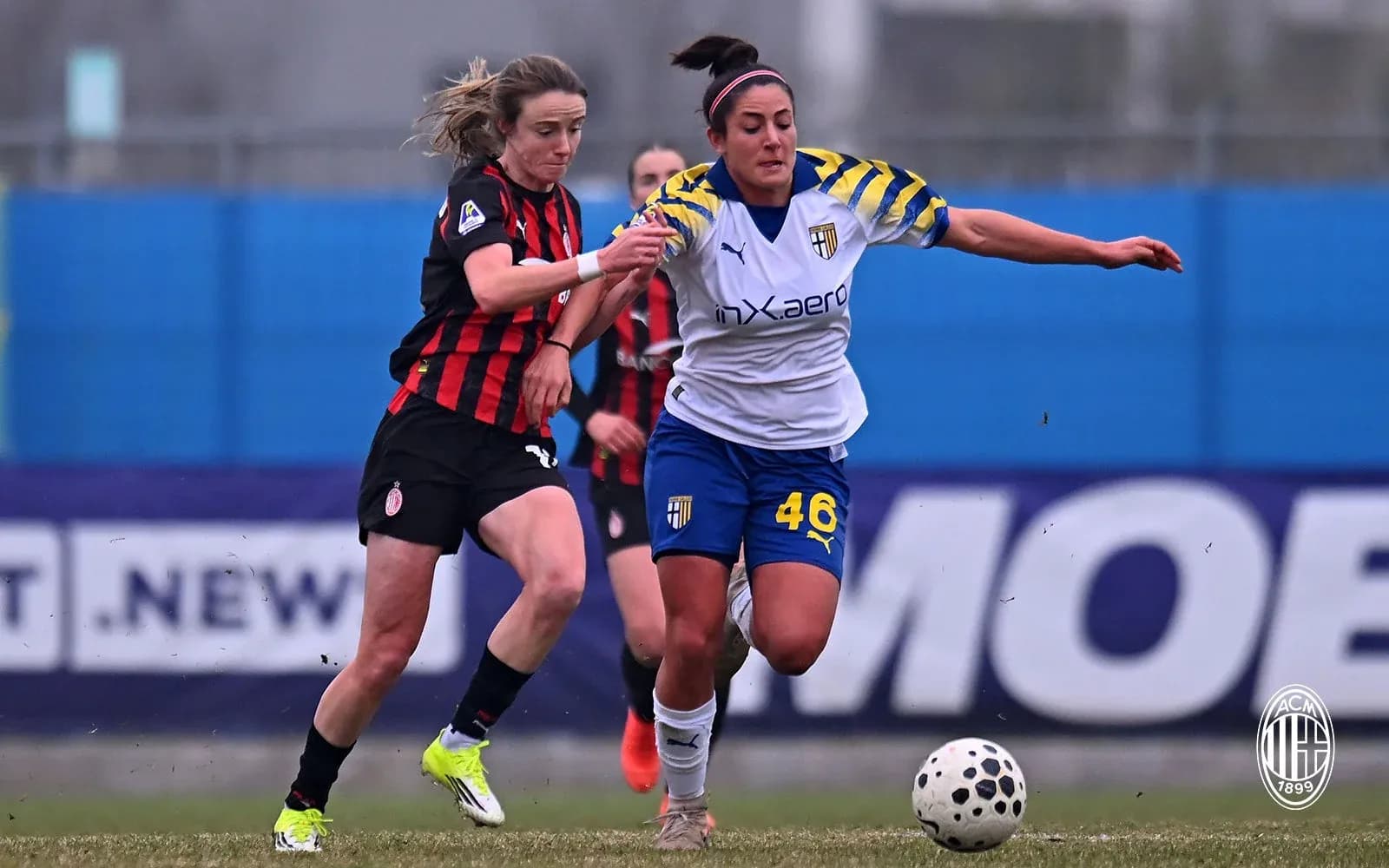
AC Milan W Dominates Parma W in Serie A Women Match
Under the pale midday light at Centro Sportivo Peppino Vismara, AC Milan W closed out a statement 3–1 win over Parma W that felt less like a single result and more like a crystallisation of their seasonal identity. Following this result in the Serie A Women 2025 regular season (Round 21), the table tells a clear story: Milan sit 6th on 32 points with a goal difference of 6, while Parma remain 10th on 16 points and a goal difference of -13. The gap between them is not just numerical; it is structural.
Over the campaign in total, Milan have built themselves on balanced numbers: 31 goals scored and 25 conceded across 21 matches, with home form a particular pillar. At home they have scored 18 and conceded 15 in 11 games, an attacking average of 1.6 goals and a defensive average of 1.4. Parma, by contrast, arrive as a side split in two: at home they can compete (13 scored, 14 conceded), but on their travels they have only managed 2 goals and shipped 14 across 11 away fixtures, averaging 0.2 goals for and 1.3 against away from home. A 3–1 defeat in Milan fits those patterns almost too neatly.
Tactical Voids and Squad Shapes
Neither data nor lineups flag clear absences, so the tactical voids are more conceptual than personnel-based. For Milan, Suzanne Bakker leans across the season on a 4-3-3 spine (used 10 times), occasionally morphing into 4-2-3-1 or 4-1-4-1. Even if the match sheet does not list a formation, the personnel against Parma hint at that familiar back-four-plus-midfield-triangle structure.
L. Giuliani anchored the side in goal, shielded by E. Koivisto, K. De Sanders, A. Soffia and M. Keijzer. Keijzer, who has already accumulated 23 tackles and 3 successful blocks this season, is more than a simple full-back; she is a front-foot defender who steps into midfield lanes, and her presence in the XI underlines Milan’s intent to defend high and aggressively.
In midfield, G. Arrigoni and M. Mascarello formed the central engine, with C. Grimshaw adding vertical running and late support. Mascarello, one of the league’s most carded players with 4 yellows in total, embodies Milan’s willingness to foul and disrupt transitions. Higher up, S. Stokic, T. Kyvag and C. Dompig offered a fluid attacking trident, with Dompig – who already has a red card to her name this season – walking the thin line between edge and excess.
Giovanni Valenti’s Parma have spent the season in three-at-the-back structures: 3-4-2-1 most frequently (7 times), with variants like 3-4-3 and 3-5-1-1. Against Milan, the starters again suggested a back three: D. Cox, C. Ambrosi and C. Minuscoli likely forming the defensive line, with M. Gueguen and M. Uffren patrolling central midfield, flanked by I. Rabot and L. Dominguez. Ahead of them, C. Prugna and G. Distefano provided support to A. Kerr.
The tactical void for Parma is not in numbers at the back but in the spaces around their wing-backs. Away from home they have failed to score in 9 of 11 matches overall, and when they do push those wide players on, they often lack the recovery speed or compactness to protect the channels behind.
Disciplinary trends reinforce the narrative. Milan’s yellow-card distribution shows a late-game spike: 31.58% of their yellows arrive between 76–90 minutes, and they also spread red cards across the second half. Parma mirror that pattern, with 29.17% of their yellows and 100.00% of their reds coming in the same 76–90 window. This is a fixture between two sides who fray at the edges as fatigue sets in, and a 3–1 scoreline after a 1–1 half-time suggests Milan managed that chaos better.
Key Matchups: Hunter vs Shield, Engine Room vs Enforcer
The “Hunter vs Shield” duel lives primarily in Milan’s collective attack versus Parma’s away resistance. In total this campaign, Milan average 1.5 goals per game, while Parma concede 1.3 overall. At home, Milan’s 1.6 goals per match meet a Parma side that, away, have conceded 14 in 11. The balance was always likely to tilt red-and-black.
Individually, K. van Dooren stands as Milan’s sharpest weapon in the league context: 5 goals from 18 shots, 12 on target, and a rating of 6.9. She began this match on the bench, but her mere presence in the squad tilts the tactical picture. As a late-game option, she offers precisely the kind of penalty-box intelligence that punishes tired legs – a dangerous contrast to Parma’s late disciplinary lapses.
For Parma, G. Distefano is the creative fulcrum. Across the season she has 1 goal and 2 assists, but the deeper numbers tell the story: 24 shots, 12 on target, 16 key passes and 31 dribble attempts with 11 successes. She is also a relentless duelist, contesting 151 duels and winning 81. Against Milan’s back line, particularly Keijzer and Soffia, Distefano’s ability to receive under pressure and draw fouls (50 drawn in total) is Parma’s best route to territory and set-pieces.
The “Engine Room” battle, though, was always going to be decisive. On one side, Milan fielded Mascarello and Grimshaw, both comfortable on the ball and combative without it. Grimshaw’s season numbers – 263 passes, 11 key passes, 12 tackles and 4 successful blocks – paint her as a true box-to-box conduit. On the other, Parma rely on M. Uffren, one of the league’s most industrious midfielders: 512 passes with 11 key, 32 tackles, 3 blocked shots and 34 interceptions. She is also their primary disciplinary risk, with 7 yellow cards and a penalty missed, a detail that underlines both her centrality and her volatility.
In this match, Milan’s midfield trio had the advantage of structure. With a back four behind them, they could press higher, knowing that Koivisto and Keijzer could squeeze up to condense space. Parma’s 3-4-2-1, by contrast, asks Uffren and Gueguen to cover huge lateral zones. Over 90 minutes, that constant shuttling often leaves gaps between the lines, precisely where Grimshaw thrives.
Statistical Prognosis and Tactical Verdict
Following this result, the season-long numbers feel vindicated rather than challenged. Milan’s total goal difference of 6 (31 scored, 25 conceded) reflects a side that, while not dominant, can outscore opponents when their structure holds. Their 7 clean sheets in total and 7 matches where they failed to score reveal a high-variance profile, but Parma’s away impotence was the perfect antidote.
Parma’s overall record – 2 wins, 10 draws, 9 losses from 21 matches – is that of a team that clings but rarely cuts. Their total of 15 goals for and 28 against confirms a fragile attack married to a defence that, though not catastrophic, is constantly under strain. The fact they have kept 4 clean sheets away yet scored only 2 goals on their travels tells you everything about their conservative away blueprint.
From an Expected Goals perspective, even without explicit xG numbers, the structural indicators are clear. Milan, with higher shot volume players like van Dooren and more creative hubs like Park Soo-Jeong and Grimshaw, are built to generate more and better chances. Parma, who have failed to score in 11 matches overall, are far more dependent on low-probability moments, set-pieces and individual inspiration from Distefano or Uffren.
The disciplinary data adds a final layer to the prognosis. Both sides tend to accumulate cards late, but Milan’s spread of yellow and red cards across the second half suggests a team that can live with controlled aggression. Parma’s single red in the 76–90 range and Uffren’s 7 yellows hint at a side more likely to unravel when chasing.
In narrative terms, this 3–1 at Peppino Vismara reads like a microcosm of the campaign. Milan’s structured 4-3-3 principles, anchored by a proactive back line and a hard-running midfield, ultimately overwhelmed a Parma side whose three-at-the-back system demands more attacking punch than their numbers can provide. The squad analysis and season statistics converge on the same conclusion: when these two meet, Milan’s ceiling is simply higher, and over 90 minutes, that difference almost inevitably tells.