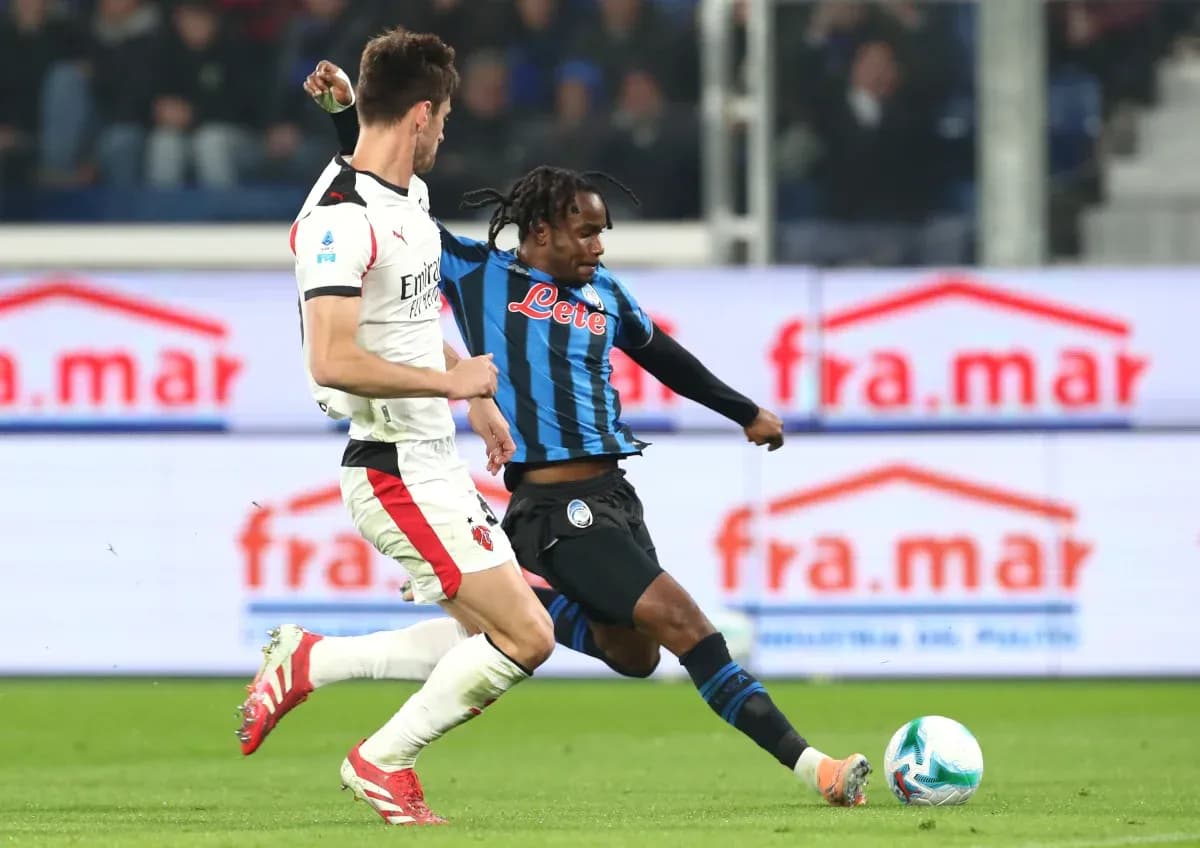
AC Milan vs Atalanta: Key Serie A Clash on 10 May 2026
Stadio Giuseppe Meazza sets the stage on 10 May 2026 as AC Milan host Atalanta in a late-season Serie A clash with heavy European implications. Milan arrive in third place on 67 points, firmly in the Champions League positions but stumbling in form, while seventh‑placed Atalanta, on 55 points, are pushing to turn a solid campaign into European qualification.
With just three rounds left in the regular season, the stakes are clear: Milan need to steady themselves to lock in a top‑four finish; Atalanta must take points off direct rivals if they are to close the gap to the European places.
Form and momentum
In the league, Milan’s overall record of 19 wins, 10 draws and 6 defeats from 35 matches is strong, underpinned by a +19 goal difference (48 scored, 29 conceded). At home they have been solid rather than spectacular: 9 wins, 5 draws and 3 defeats from 17 games, with 22 goals scored and 16 conceded. The clean‑sheet count at San Siro (7 in 17) speaks to a generally reliable defensive structure.
However, the recent form line “LDWLL” hints at a wobble at precisely the wrong time. Across all phases, Milan’s season pattern shows long winning runs – a biggest streak of four straight victories – but also the capacity to drop into short losing spells, as reflected in their two‑match losing streak maximum. Coming into this fixture, the trajectory is downward rather than upward.
Atalanta’s campaign has been more streaky but no less competitive. Seventh in the table with 14 wins, 13 draws and 8 defeats (goal difference +15, 47‑32), they are tough to beat and rarely outclassed. Away from Bergamo they have taken points in 12 of 17 outings (5 wins, 7 draws, 5 losses), scoring 22 and conceding 18. Six away clean sheets underline how organised they can be on the road.
Their recent form string, “DLDLW”, suggests inconsistency: draws are frequent, and they oscillate between strong spells (a three‑game winning streak, a five‑game unbeaten drawing run) and short slumps (a three‑match losing run). They are not in peak rhythm, but they remain dangerous, especially when the game opens up.
Tactical battle
Both sides are structurally similar, which sets up a fascinating tactical mirror. Across all phases, Milan have predominantly lined up in a back three: 3‑5‑2 has been used 31 times, with occasional switches to 3‑4‑2‑1 and 3‑1‑4‑2. Atalanta mirror that approach: 3‑4‑2‑1 in 31 matches, with 3‑4‑1‑2 and 4‑3‑3 as alternative looks.
For Milan, the three‑centre‑back base has delivered one of Serie A’s more efficient defences, conceding just 0.8 goals per game across all phases (0.9 at home). The wing‑backs are key to both width and defensive protection, while the midfield five allows them to compress central areas and spring forward quickly.
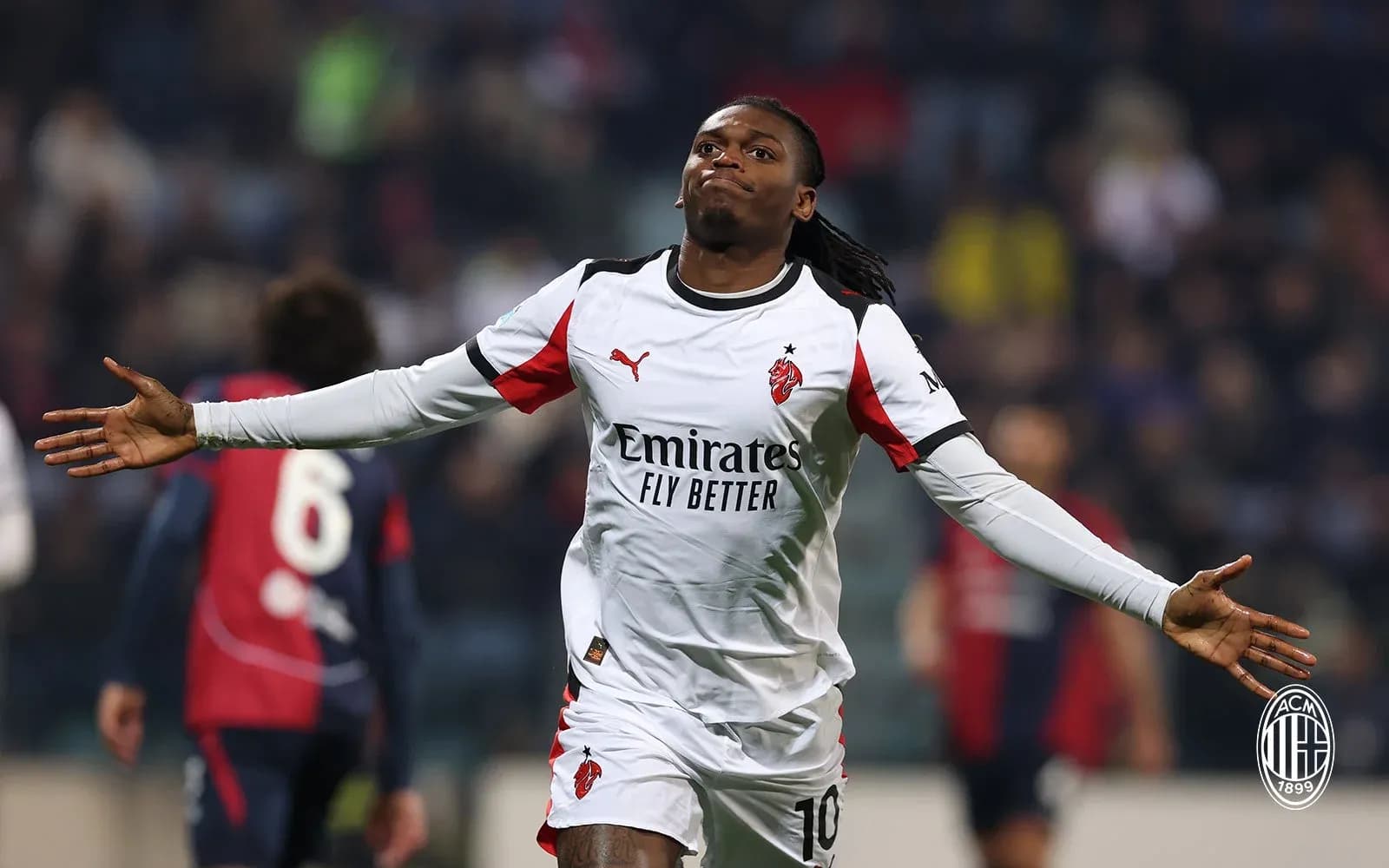
In attack, Milan’s edge comes from individual quality in the final third. Rafael Leão is their leading league scorer with 9 goals and 3 assists from 27 appearances, operating as a left‑sided forward or second striker. His profile is that of a high‑impact carrier: 51 dribble attempts with 24 successful, 20 key passes and 23 shots on target from 42 total. When Milan can isolate him 1v1, their whole attacking game lifts.
On the opposite flank or between the lines, Christian Pulišić has been arguably their most consistently productive attacker. With 8 goals and 3 assists in 28 appearances and an average rating of 7.01, he combines end product with creative volume: 37 key passes, 59 dribble attempts (27 successful), and 24 shots on target from 37. His movement into half‑spaces is crucial against a back three, targeting the channels between centre‑backs and wing‑backs.
Milan also have a useful weapon from the spot: across all phases they have converted 5 of 5 penalties as a team. Individually, Leão has scored 2 penalties without a miss, while Pulišić has scored none and missed one, which may influence who steps up if a decision goes their way.
Atalanta’s 3‑4‑2‑1 is built around a flexible front line and high‑energy wing‑backs. In possession, they can morph into a 3‑2‑5, with both wing‑backs pushing high and the double pivot protecting transitions. Without the ball, the front three press the build‑up, trying to force mistakes as Milan play out from a back three.
Their attacking threat is shared between two centre‑forwards having strong seasons. Nikola Krstović has 10 goals and 4 assists from 31 appearances, with 72 shots (32 on target) and 19 key passes. He is active across the front line, engaging in 240 duels and winning 108, which points to his role as both a finisher and a reference point.
Gianluca Scamacca matches him on the goal tally with 10 strikes and 1 assist in 23 appearances. His shot profile (49 total, 22 on target) is efficient, and he has also been effective from the penalty spot, scoring 2 penalties without a miss. The presence of two double‑digit scorers gives Atalanta a genuine multi‑pronged threat that can test even a well‑organised Milan defence.
Defensively, Atalanta concede 0.9 goals per game across all phases, rising to 1.1 away. Their six away clean sheets and relatively low goals‑against numbers suggest a side comfortable defending deeper when required. However, their card profile – yellow cards clustering in the final half‑hour and red cards in the early and late phases – hints at a team that can become stretched and rash as games progress.
Head‑to‑head: fine margins, Atalanta edge
Recent competitive meetings between these sides have been tight. The last five non‑friendly fixtures show:
- On 28 October 2025 in Serie A, at Gewiss Stadium, Atalanta 1‑1 AC Milan (draw).
- On 20 April 2025 in Serie A, at Stadio Giuseppe Meazza, AC Milan 0‑1 Atalanta (Atalanta win).
- On 6 December 2024 in Serie A, at Gewiss Stadium, Atalanta 2‑1 AC Milan (Atalanta win).
- On 25 February 2024 in Serie A, at Stadio Giuseppe Meazza, AC Milan 1‑1 Atalanta (draw).
- On 10 January 2024 in the Coppa Italia quarter‑finals, at Stadio Giuseppe Meazza, AC Milan 1‑2 Atalanta (Atalanta win).
Across those five games, Atalanta have 3 wins, AC Milan have 0, and there have been 2 draws. Notably, Atalanta have won on their last two league visits to San Siro and also knocked Milan out of the Coppa Italia there.
The scorelines themselves underline how slender the margins have been: no team has scored more than twice in any of those matches, and three of the five have been decided by a single goal.
Team news and selection issues
Milan face this crucial match with two significant absentees. Luka Modrić is ruled out with a broken cheekbone, removing a high‑level controller from their midfield rotation. Fikayo Tomori is also unavailable due to suspension (red card), forcing a reshuffle in the back three. Given Milan’s reliance on a three‑centre‑back system, Tomori’s absence is a structural problem as well as a loss of pace and recovery defending.
For Atalanta, L. Bernasconi is out injured. While not among their headline attackers, his absence trims depth and may slightly restrict rotation options, particularly if he covers defensive or wide roles in their usual 3‑4‑2‑1.
These absences tilt the tactical equation slightly: Milan must protect a potentially weakened defensive line, while Atalanta arrive closer to full strength in their key attacking zones.
Key trends and match dynamics
Across all phases, Milan have failed to score in just 7 of 35 league matches, and Atalanta in 7 of 35 as well. Both sides average over a goal per game (Milan 1.4, Atalanta 1.3), suggesting that a goalless stalemate would be against trend.
Milan’s home defensive numbers (0.9 goals conceded per game, 7 clean sheets in 17) indicate that they are usually hard to break down at San Siro. Yet Atalanta’s recent history here – scoring in each of their last three competitive visits and winning twice – shows they can find solutions against this opponent and in this venue.
Discipline could also matter. Milan’s yellow cards tend to spike from 46‑90 minutes, and they have seen red in three different time ranges. Atalanta’s red cards cluster early and late. In a high‑stakes match between two aggressive pressing sides, the probability of a decisive card incident is non‑negligible.
The verdict
On paper, league position and season‑long numbers make Milan slight favourites: better points tally, stronger goal difference, and a home record that is solid. Their attacking spearhead of Rafael Leão and Christian Pulišić offers more individual match‑winners than most Serie A opponents.
However, the context complicates that simple reading. Milan’s recent “LDWLL” form, the absence of Fikayo Tomori in a three‑centre‑back system, and the lack of Luka Modrić’s control in midfield all erode some of their structural advantages. Atalanta, by contrast, bring two in‑form scorers in Nikola Krstović and Gianluca Scamacca, a well‑drilled 3‑4‑2‑1, and a recent head‑to‑head record that is decisively in their favour (3 wins, 2 draws in the last 5).
Tactically, this looks like a balanced, cagey game rather than a wide‑open shoot‑out. Both coaches are likely to mirror each other’s back‑three setups, compressing the centre and asking their wide players and creative forwards to decide the contest in the half‑spaces.
The most logical expectation is a tight match settled by one goal, or shared points. Given Atalanta’s ability to take results at San Siro and Milan’s current dip, a draw or a narrow outcome either way feels more probable than a comfortable home win. Milan still have enough quality to edge it, but they will need Leão and Pulišić to rise above a tactically complex, physically demanding contest.